








TGS said on June 9, 2026 that it has won an offshore wind site characterization contract in Europe, adding another project to its 2026 offshore wind schedule. The announcement was also published through Euronext company news, making it an official market disclosure rather than an informal update.
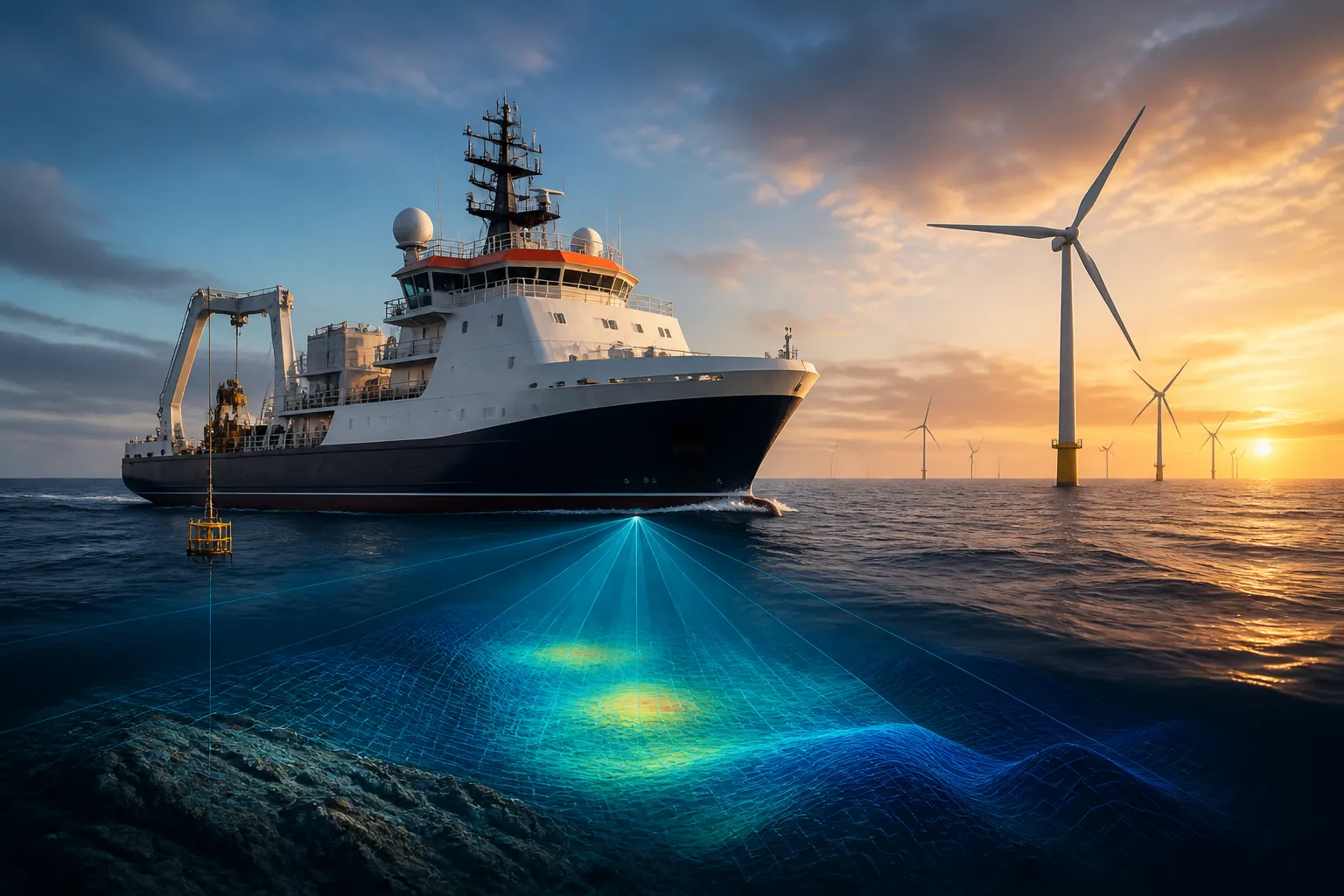
The company said the Ramform Vanguard is scheduled to begin data acquisition in early August for an estimated three-week campaign. That timetable places the work in the heart of the European offshore wind survey season, when vessel access, weather windows and equipment availability can shape how quickly developers move from planning to investment decisions.
While TGS did not identify the project or client, the award still offers a useful signal about where the offshore wind market is heading. Site characterization is one of the less visible parts of project development, but it is among the most important. It helps developers understand the seabed, subsurface conditions and marine environment before they commit to final design and construction.
What the Contract Announcement Says
The key facts in the June 9 disclosure are straightforward. TGS said it has secured an offshore wind site characterization contract in Europe, the Ramform Vanguard is expected to start data acquisition in early August, and the campaign is estimated to last about three weeks.
The company also said it is pursuing additional tenders that could extend its 2026 acquisition campaign into the fourth quarter. That matters because offshore wind survey work is often planned in blocks, with one vessel and crew moving from project to project as contracts are awarded and weather conditions allow.
What the announcement does not say is just as important. The European project is not named, the client is not identified, and the contract value is not disclosed. Those omissions leave open a number of questions about scale, geography and whether the job is a repeat engagement or a new relationship.
Why Site Characterization Matters
Offshore wind site characterization is the early-stage technical work that helps determine whether a project site is suitable for turbines, cables and other infrastructure. In practical terms, it is the evidence base developers use to reduce uncertainty before major capital is committed.
For offshore wind, that means gathering data that can inform foundation design, installation planning, cable routing and risk models. The more complete the site picture, the more confidently engineers and financiers can assess whether the project can be built on time and on budget.
This is why the work matters for project bankability. A project becomes easier to finance when developers can show that they understand the seabed conditions, the likely engineering challenges and the operational constraints. In a sector where costs, supply chains and schedules can shift quickly, that information can be decisive.
It also matters for construction risk. Poor or incomplete site data can lead to design changes, delays or unexpected marine conditions once installation starts. By contrast, better characterization can reduce the chance that surprises appear late in the process, when they are usually more expensive to fix.
That makes a survey contract like this more than a routine vessel booking. It is one of the steps that can determine whether a planned offshore wind project moves smoothly toward a final investment decision or stalls while developers gather more technical evidence.
How This Fits TGS’s 2026 Europe Campaign
TGS framed the award as part of a broader 2026 Europe offshore wind season, not as an isolated win. The company said additional tenders remain in the market, suggesting it is still bidding for more work that could keep the Ramform Vanguard and associated resources busy later in the year.
That broader framing is useful because offshore survey companies often compete on scheduling as much as on technical capability. If a vessel is already positioned for one job, or if crews and equipment can be rolled into another project with limited downtime, the economics improve for the contractor and the developer alike.
For TGS, the announcement indicates continued participation in a European market that remains active enough to support seasonal acquisition campaigns. It also hints at a pipeline of upcoming decisions by offshore wind developers, who need survey data well before they can move into design finalization and construction procurement.
There is also a logistics angle. Survey vessels are specialized assets, and their time is finite. A three-week campaign may sound brief, but it sits within a larger chain of mobilization, transit, execution and processing work. If TGS secures more tenders, the schedule can extend deeper into the year and make vessel planning more complex.
That is one reason this disclosure matters beyond the single award. It suggests a market where offshore wind development continues to generate demand for marine data acquisition, even as companies manage timing, weather windows and competing survey priorities.
Timeline, Unknowns and Next Steps
The timeline disclosed by TGS is clear enough to map the next few months. The company announced the award on June 9, 2026. The Ramform Vanguard is scheduled to begin data acquisition in early August. The estimated campaign length is about three weeks.
After that, the next likely milestone is operational rather than financial: completion of acquisition and any subsequent progress update tied to the campaign. The company also indicated that it is seeking additional tenders, so another useful marker will be whether TGS announces more offshore wind work later in the season.
Several key points remain undisclosed. The project location has not been identified, the commercial value is unknown, and the announcement does not say whether the work is tied to a single developer, a consortium or a repeat client. Those details would help readers judge how significant the award is within the wider market.
The release also includes a standard forward-looking statement warning that future results may differ because of market and operational risks. That caution is routine, but it is especially relevant in offshore work, where scheduling, marine conditions and client timing can all change a project’s economics.
What It Means for the Offshore Wind Pipeline
For the broader offshore wind market, the announcement is a reminder that the industry’s progress depends on a long chain of technical tasks before construction starts. Survey vessels are not the most visible part of that chain, but they are among the most important.
Developers need data before they can commit to foundations, installation methods and cable routes. Financiers need that same information to judge risk. Regulators and project teams rely on it to compare options and move through approvals with fewer surprises. In other words, site characterization is part of the infrastructure that supports the infrastructure.
The award also suggests that European offshore wind activity continues to generate demand for specialist survey capacity. That does not by itself reveal the pace of project approvals or construction starts, but it does show that developers are still spending money on the technical groundwork required to keep projects moving.
For readers following the sector, the most important unresolved question is what comes after the early-August start. If TGS wins more tenders, the company’s 2026 campaign could stretch into the fourth quarter, offering a fuller picture of how active Europe’s offshore wind survey market really is this year.
For now, the official disclosure points to a real contract award, a defined vessel schedule and a market still investing in the technical steps that precede offshore wind construction. The client and value remain undisclosed, but the operational message is clear: the survey season is underway, and more work may follow.