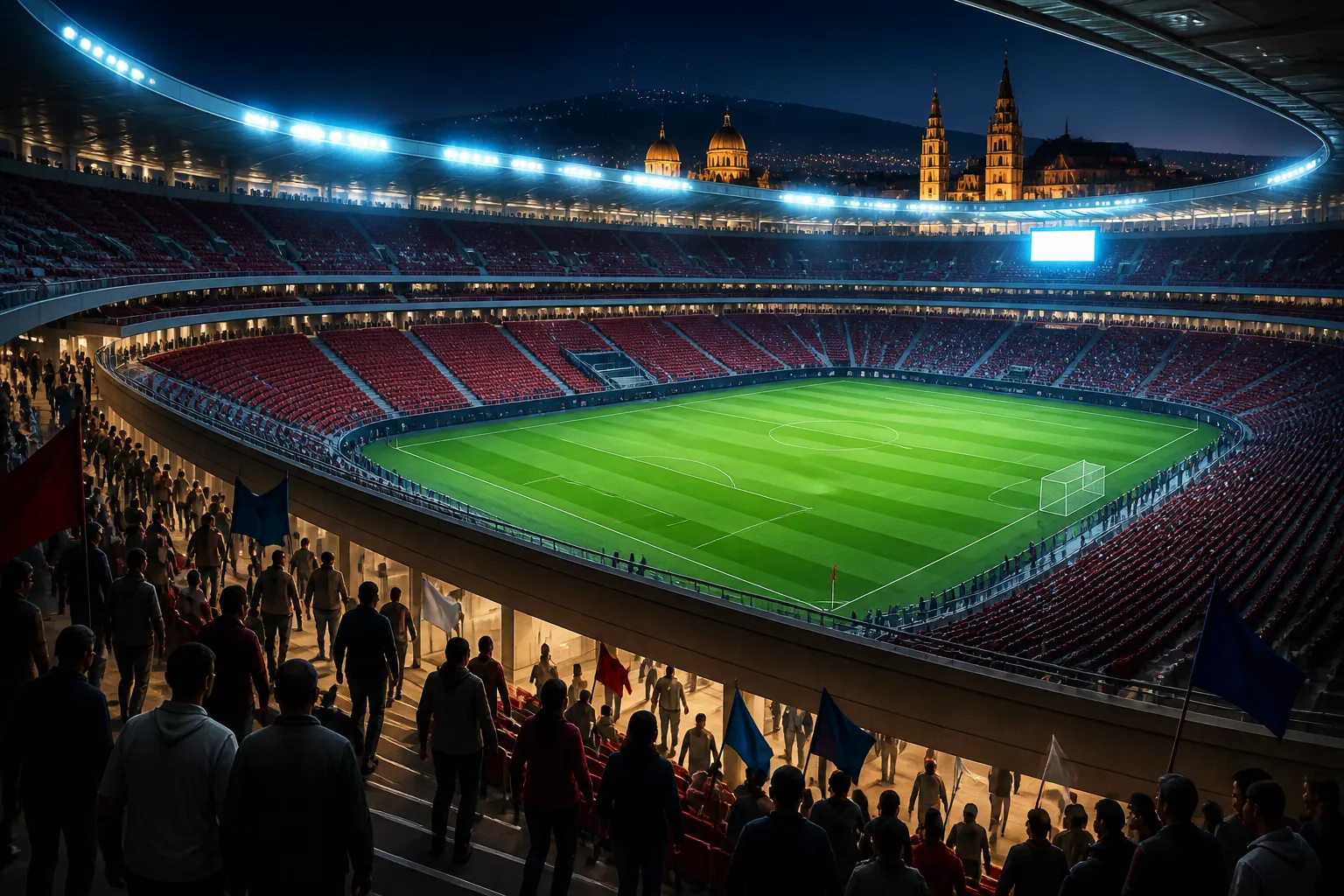









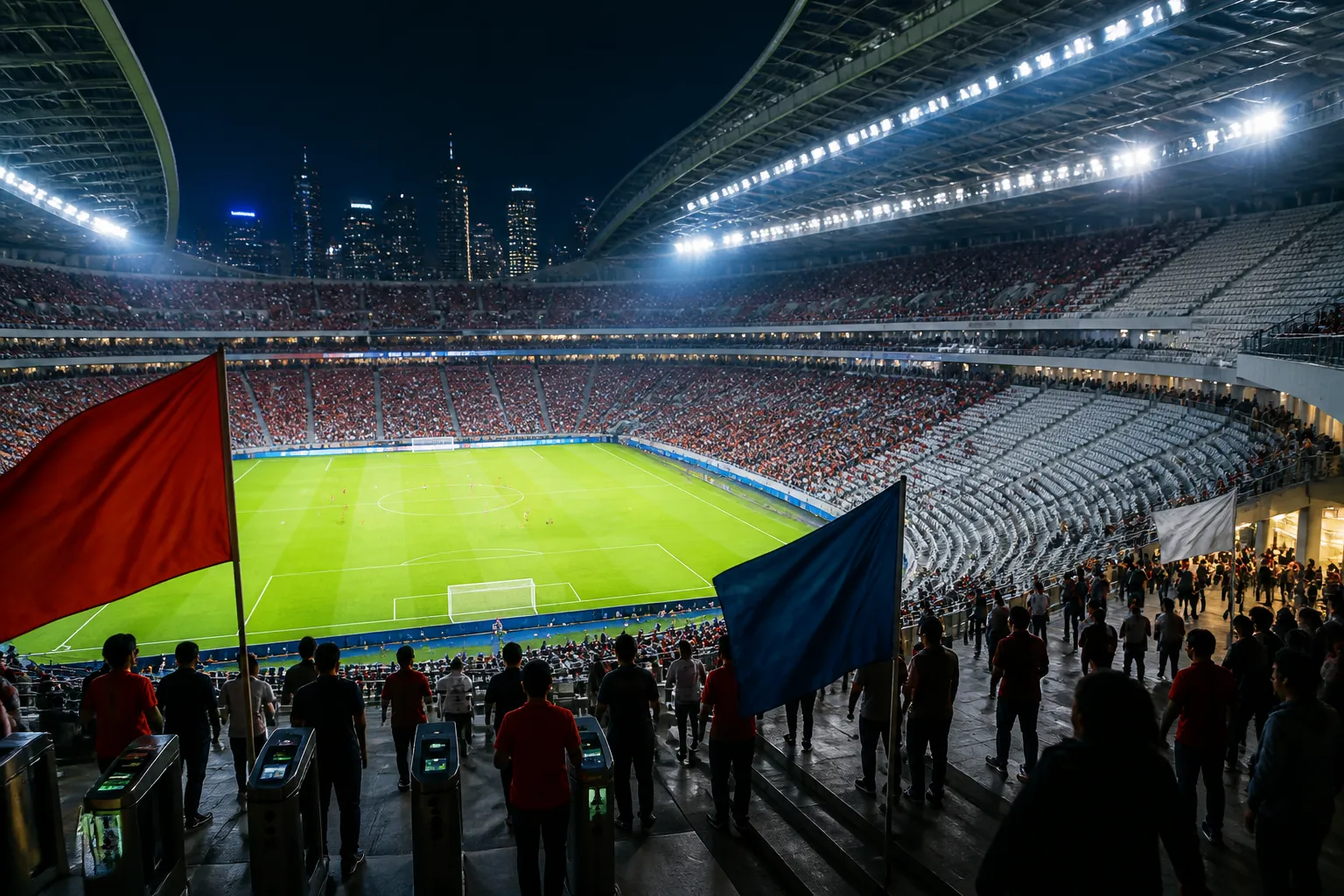
Guadalajara’s World Cup atmosphere came under scrutiny on June 11, 2026, after viewers and attendees noticed visible empty seats during the Group A match between Korea Republic and Czechia. FIFA’s response was straightforward: the sparse-looking sections did not tell the full attendance story.
According to AP’s report, FIFA said many ticketed spectators were standing in concourses and concession areas instead of sitting in their assigned seats. That matters because a stadium can appear less full on television or from a single camera angle even when the ticketed crowd inside the venue is close to capacity.
FIFA’s published schedule confirms that the match was part of the opening day of the tournament, which began on June 11, 2026, and that Korea Republic v Czechia was listed as a Group A fixture in Guadalajara. The broader takeaway is that crowd optics, ticket scanning, and in-stadium movement can all shape how a World Cup audience is perceived in real time.
What FIFA Said About the Empty Seats
AP reported that FIFA defended the attendance figures after the empty-seat optics drew attention at Guadalajara Stadium. The organization said the apparent gaps in the stands were partly explained by fans who had already entered the venue but were spending time in the concourses rather than occupying their seats during the match.
That explanation is important because it separates two different ideas: physical presence inside the stadium and visible seat occupancy. A section that looks empty from one angle may still be part of a crowded venue if fans are moving around, waiting in lines, or gathering away from their assigned rows.
In practical terms, FIFA was pushing back on the assumption that a visual sweep of the seating bowl tells the complete story. The governing body said the official attendance should be understood through scanned tickets and verified operational data, not a frame-by-frame count of who was seated at any one moment.
How FIFA Counts Attendance
FIFA said the official attendance figure reflects scanned tickets and spectators present within the stadium footprint. In other words, the number is based on verified entry data rather than how full the seats looked during live play.
That distinction can be confusing for casual viewers, but it is common in major events. Fans often arrive early, move between concessions and restrooms, or stand in public areas inside the venue. When that happens, the bowl can appear less dense than the actual counted crowd.
For this match, AP reported the announced attendance was 44,985 in Guadalajara Stadium, which has a capacity of 45,664. On paper, that is near capacity. Visually, though, a combination of movement, spacing, and camera angle can make a nearly full stadium look patchier than the number suggests.
The lesson for readers is simple: at large tournament venues, attendance and occupancy are not always the same thing. A high scanned-ticket figure does not guarantee every seat will be filled and occupied for every minute of play.
Why the Visuals Looked Sparse
The most immediate explanation is concourse congestion. AP reported that some ticketed fans were in the concourses and concession areas, which would naturally reduce the number of visible bodies in the seating bowl at any given time. That can be especially noticeable during halftime, after goals, or in slower passages of play when television cameras linger on broad sections of the stands.
There is also a perception problem. Supporters may enter with valid tickets and be counted in the official attendance, but if they arrive late, leave seats temporarily, or cluster in food and drink areas, the stadium can read as underfilled. For viewers at home, the difference between “present” and “seated” is easy to miss.
In a World Cup setting, these visuals matter because they shape the narrative around demand, ticket pricing, and tournament atmosphere. A near-capacity figure does not stop social media users from focusing on empty rows, and once that perception takes hold, it can be difficult for organizers to correct without clear context.
That does not mean the concern is trivial. Fans expect a World Cup match to look and feel full, and if a stadium’s sightlines or circulation patterns make the crowd appear thinner than it really is, that can affect how the event is judged even when the underlying attendance data is strong.
What It Means for Fans and Organizers
The Guadalajara case highlights a broader challenge for tournament organizers: delivering a strong live atmosphere while also handling security, concessions, and crowd flow. When fans spend more time in common areas, it can help explain why the stands do not always mirror the ticket count.
For fans, the story is a reminder that a stadium ticket does not always translate into uninterrupted seat time. People move around. They queue. They talk. They watch parts of the match from different angles. All of that is normal, but it can create a disconnect between the official count and the visual impression.
For ticket buyers, the optics raise a different issue: expectation. If someone pays for a World Cup seat, they expect an electric, packed environment. Even when the venue is close to full by attendance metrics, large pockets of visible emptiness can make the experience feel less premium than the price suggests.
Organizers also have an incentive to clarify counting methods early. The better the public understands how attendance is calculated, the less likely a near-capacity crowd will be dismissed as a soft turnout based on a few broadcast shots.
What Comes Next in Group A
For Korea Republic and Czechia, the match in Guadalajara was one piece of a Group A campaign that began on tournament opening day. The supplied material confirms the fixture and the venue, but it does not include the teams’ next opponents, final score, or updated standings.
That means the most responsible next step is to watch how Group A develops rather than speculate about table impact. The same applies to Mexico and South Africa: FIFA’s schedule places all four nations within the tournament’s opening group-stage picture, but the verified material provided here does not list their subsequent fixtures or kickoff times.
What is clear is that Guadalajara will remain under the microscope as Group A continues. If crowds are again dense in the concourses but less visible in the seats, the stadium’s optics could become part of the larger conversation around fan experience in this World Cup.
For now, the unresolved issue is not whether fans were there. FIFA says they were. The question is how tournament venues can better align attendance counts, seating patterns, and the live visual impression that millions of viewers take away from the match.