








Florida Atlantic University has landed a new defense-innovation award that points to a long-running problem beneath the waves: underwater machines still struggle to communicate quickly and reliably. The university announced on June 9, 2026 that its Center for Connected Autonomy and AI received a 12-month, $1 million award through the AUKUS Maritime Innovation Challenge.
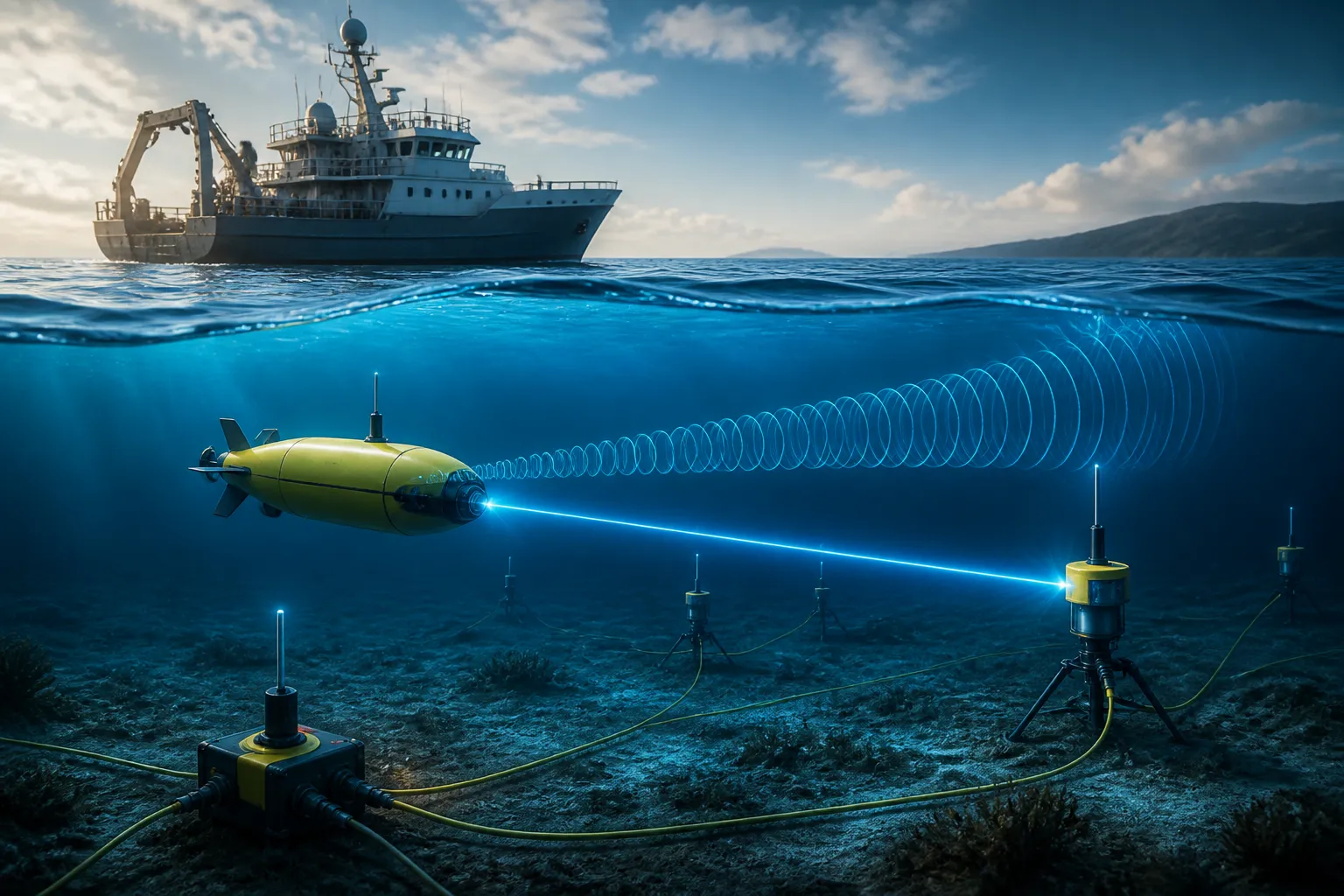
The project is being developed with Swiss partner Hydromea SA and is built around a hybrid approach. Instead of relying on one kind of signal, the team plans to combine long-range acoustic communications with short-range optical networking for underwater use. In plain terms, the work is aimed at helping autonomous vehicles, seabed sensors, and maritime operators exchange data more effectively in environments where conventional wireless tools do not work well.
The grant itself is important, but the bigger story is the technical shift it reflects. Underwater communication has long been constrained by the ocean’s physical limits, and AUKUS partners are now funding approaches that try to work around those limits rather than ignore them.
Why Underwater Communication Is Hard
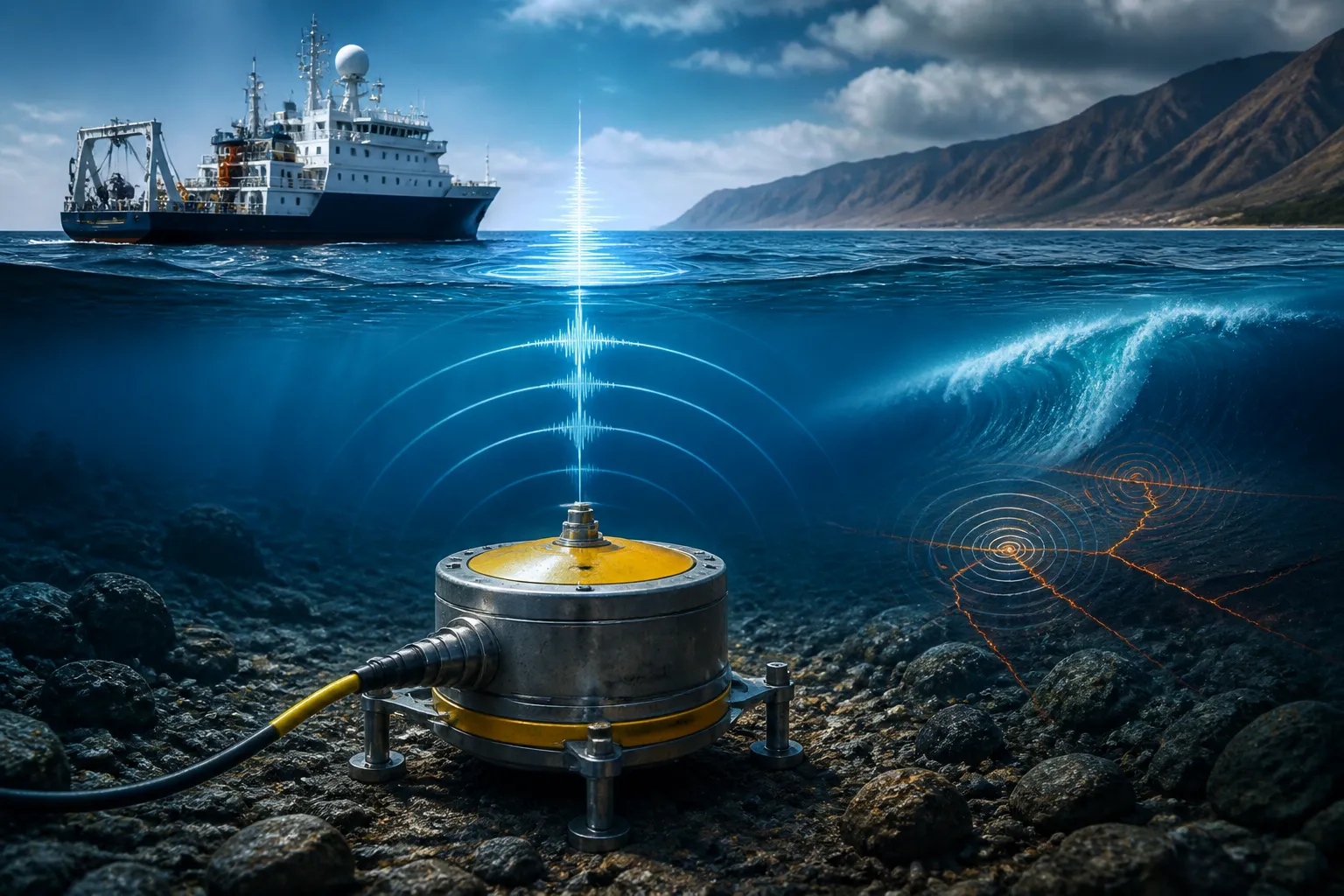
Most people are used to radios, Wi-Fi, and satellite links. Underwater, those tools quickly run into a basic problem: water absorbs and distorts electromagnetic signals far more than air does, which is why GPS and ordinary wireless networking do not function the same way below the surface.
That leaves ocean systems with fewer options. Acoustic communications can travel farther through water, which is why they remain the workhorse for many underwater applications, but they are slow compared with terrestrial networks and can be affected by noise, interference, and the complexity of the marine environment.
Optical communications offer a different tradeoff. They can move data much faster over short distances, but they are more limited by water clarity, alignment, and range. This is why a hybrid system is attracting attention: one link can cover distance, while the other can handle high-speed bursts when vehicles or sensors are close enough to connect.
That balance matters for autonomous underwater vehicles, which may need to report data, receive instructions, or coordinate with nearby devices without surfacing. It also matters for fixed seabed sensors that need to pass information along a network rather than sending everything back through a single narrow channel.
What FAU and Hydromea Will Test
According to FAU, the award supports work led by its Center for Connected Autonomy and AI with Hydromea SA as the external partner. The university said the project will bring together long-range acoustic links and high-speed optical networking, then test the system in multiple environments over the next year.
The planned work includes lab and facility testing at Hydromea’s site in Switzerland and at FAU’s SeaTech campus in Dania Beach, followed by field demonstrations off Australia. Those locations suggest a staged process: first, prove the components can connect and exchange data in controlled settings; then, see how the system behaves in more realistic marine conditions.
That sequencing is important because underwater communications often look promising in a lab but become much harder once currents, movement, turbidity, pressure, and distance enter the picture. The project’s real test will be whether the hybrid model can maintain useful connections without sacrificing the stability needed for practical operations.
FAU’s announcement does not present public performance results yet, and that is a meaningful limitation. The final technical outcome has not been demonstrated publicly, so the award should be understood as a research and validation effort, not as proof that the system has already solved the problem.
Why AUKUS Is Backing Hybrid Systems
The award came through the AUKUS Maritime Innovation Challenge, a trilateral effort involving the U.S. Defense Innovation Unit, Australia’s ASCA, and the U.K.’s DASA. DIU’s March 31, 2025 call for solutions shows that the challenge is focused on improving undersea command, control, and communications in harsh underwater conditions.
That focus helps explain the timing. Undersea systems are becoming more autonomous, more distributed, and more data-intensive. As navies and research teams deploy more vehicles and sensors, the communications layer becomes just as important as the vehicles themselves.
AUKUS has also created a framework for shared experimentation. By funding work across allies, the program can test whether technologies developed in one setting can be evaluated and adapted across different fleets, environments, and operational needs. The fact that this project includes testing in Switzerland, Florida, and Australia suggests that the sponsors want more than a narrow local demonstration.
Still, the public record should be kept modest. The award indicates interest in a technical approach, not a confirmed operational rollout. It also does not prove that hybrid acoustic-optical networking will outperform acoustic-only systems in every condition. That question is exactly what the next 12 months are meant to examine.
Who Could Benefit From the Work
The most immediate users are likely to be the underwater platforms themselves. Autonomous vehicles that can switch between long-range acoustic communication and faster short-range optical links may be able to exchange more data, coordinate more efficiently, or reduce the time spent waiting for a slow uplink.
Seabed sensor networks are another obvious use case. These systems often gather continuous data about underwater conditions, but transmitting that information remains a bottleneck. A hybrid network could help devices share data in a more flexible way, especially if sensors are spread across a wider area.
There are also civilian applications that follow naturally from the same technical challenge. Marine science, offshore inspection, and environmental monitoring all depend on reliable underwater data flow, even if the tools and operating goals differ from defense work. The project is not being presented as a finished solution for those sectors, but the technical building blocks overlap.
What makes the work especially relevant is not just speed. It is the possibility of building communication paths that can adapt to changing underwater conditions. In many marine settings, a single method is good enough only part of the time. Hybrid networking is one way to make the system more flexible without pretending one link can do everything.
Timeline and Next Steps
The project runs for 12 months, which gives it a defined but limited window. The near-term milestones are already clear: testing in Switzerland, validation at FAU’s SeaTech campus in Dania Beach, and then field demonstrations off Australia.
Those steps should reveal whether the hybrid design can maintain stable communication across different distances and environments. They should also show how much complexity the two-link system adds, since any practical underwater network has to balance performance against size, power use, and operational simplicity.
For readers watching the broader field, the unresolved question is straightforward: can hybrid acoustic and optical communications become dependable enough to support real-world underwater autonomy at scale? FAU’s project is designed to help answer that, but the answer will depend on test results that have not yet been released.
For now, the announcement is best read as a sign of where undersea networking research is heading. Instead of searching for one perfect signal, researchers are increasingly layering technologies to fit the ocean’s constraints. Whether that approach proves robust enough will be the point of the next year’s experiments.