








Ocean-bottom seismometers rarely make headlines, but they remain one of the most important tools for understanding what happens beneath the ocean floor. USGS says these instruments help scientists study marine geohazards including subduction-zone earthquakes, submarine landslides, tsunamis, and volcanoes.
That role matters because many of the world’s most hazardous faults run offshore, where land-based stations see only part of the picture. By placing sensors on or near the seabed, researchers can capture vibrations and fault behavior that would otherwise be missed, improving both hazard maps and seismic models.
Recent deployments also show that the technology is still operationally relevant. In January 2025, USGS reported that a rapid-response fleet of ocean-bottom seismographs was deployed off Northern California within 11 days of a major offshore earthquake, a reminder that the instruments are not just for long-term studies. They can also be mobilized quickly after a big event to help scientists image fault zones and better understand aftershocks.
What Ocean-Bottom Seismometers Do
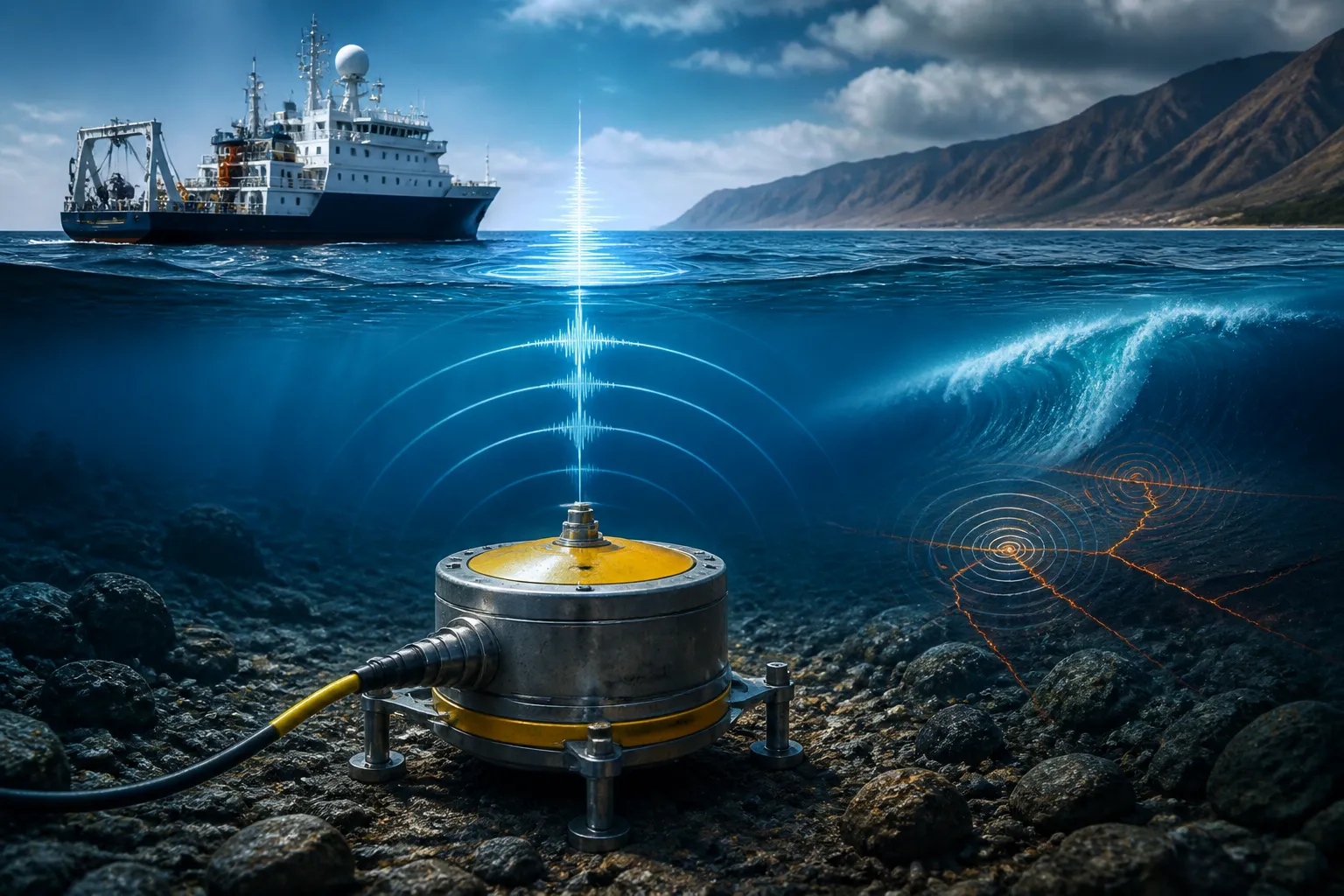
Ocean-bottom seismometers, often shortened to OBS, are designed to detect ground motion on the seafloor. The Ocean Observatories Initiative says its short-period ocean-bottom seismometers can detect vibrations from small earthquakes in the 0.1 Hz to 100 Hz range, which covers a broad band of seismic activity useful for both local and regional studies.
That sensitivity is important because offshore faults do not behave like simple extensions of onshore systems. The combination of pressure, temperature, sediment, and complex geology under the sea can alter how seismic waves move. An instrument placed on the seabed gives researchers a closer reading of those conditions.
In practical terms, OBS help fill a major observational gap. Land stations can track earthquakes once waves reach the coast, but ocean-bottom sensors can record the source region more directly. That makes them valuable for both science and hazard response.
Why Offshore Data Matters for Hazards
USGS has said ocean-bottom seismographs are valuable tools for studying subduction-zone earthquakes, submarine landslides, tsunamis, and volcanoes. Those are not abstract risks. They are the kinds of events that can move suddenly, travel far, and affect coastal communities with little warning if the offshore fault system is poorly understood.
For earthquake research, the payoff is better fault imaging. Scientists can use OBS data to see where ruptures begin, how stress moves along a fault, and how the crust is structured beneath the seafloor. That helps improve models used to assess seismic hazard.
For tsunami science, the value is indirect but crucial. Seismometers do not measure wave height the way tsunami gauges do, but they help identify the earthquakes that may generate a tsunami and improve the understanding of fault motion that drives wave formation.
That is also why ocean-bottom monitoring is often discussed alongside other offshore systems. NOAA’s DART deep-ocean tsunami system, for example, shows the importance of direct measurement in the open ocean. DART is a bottom-pressure system rather than a seismometer, but it serves the same larger goal: better visibility into deep-ocean hazards before they reach shore.
Recent Deployments and the Response Timeline
The January 2025 USGS deployment off Northern California illustrates how quickly an OBS network can be put to work after a major event. According to the agency, a rapid-response fleet was deployed within 11 days of a major offshore earthquake. That short turnaround matters because the first days and weeks after a rupture are when aftershocks, fault-zone structure, and near-field seismic behavior are most actively studied.
This kind of response does not mean every deployment is fast or simple. Ocean-bottom instruments are expensive to place, recover, and maintain, and the ocean itself makes the work logistically demanding. But the Northern California response shows that agencies still see enough scientific and operational value to invest in rapid offshore seismology when it is needed.
The timeline also shows how OBS fit into a broader monitoring strategy. Long-term seabed observations can reveal patterns over months or years, while rapid-response deployments capture the immediate aftermath of a large quake. Together, those approaches help researchers build a more complete picture than either one could provide alone.
How OBS Compare With Other Seafloor Sensors
Ocean-bottom seismometers are not the only way to observe the ocean floor. Each tool answers a different question, and that is why they are often used together rather than as substitutes.
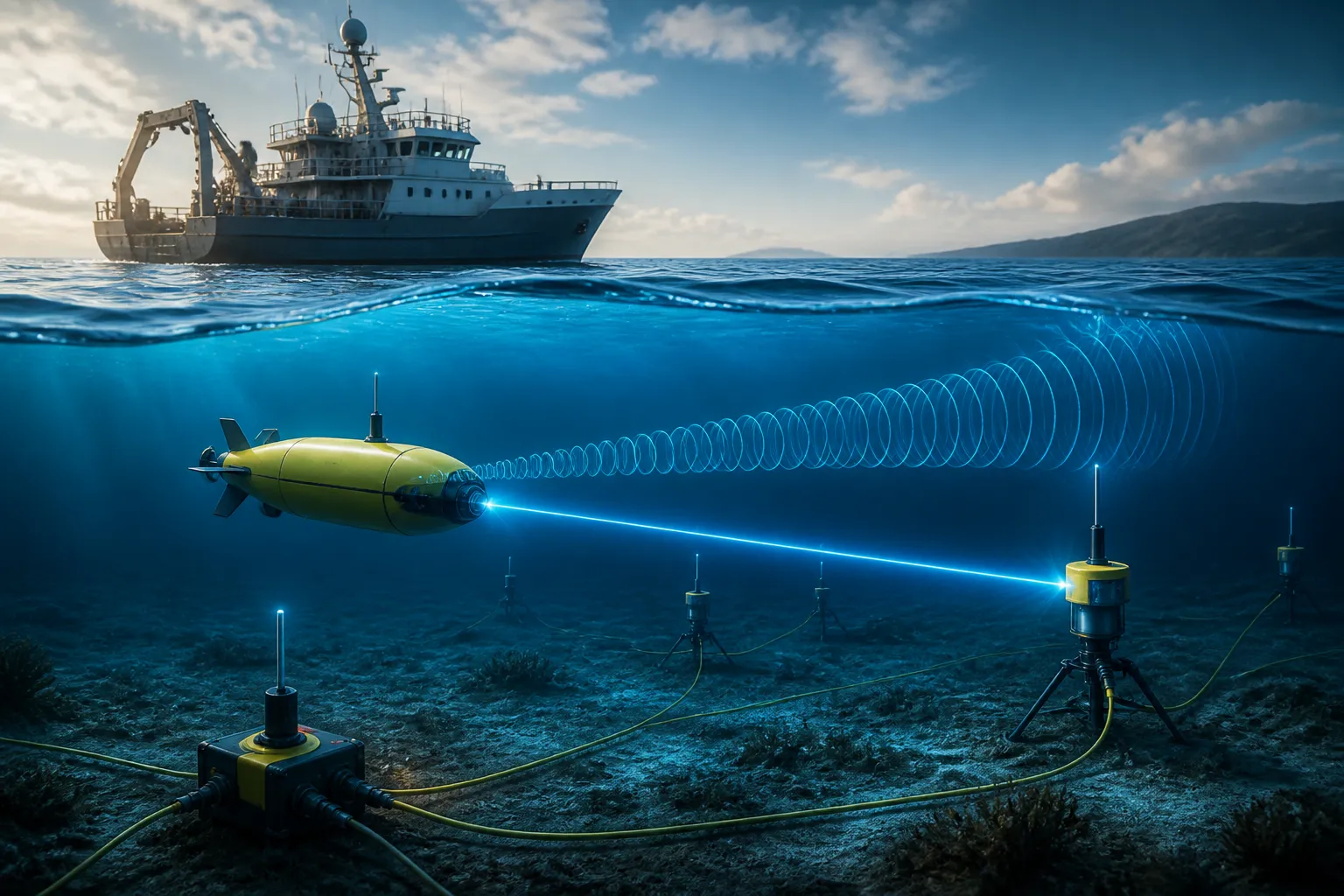
Distributed acoustic sensing, or DAS, is one of the newer technologies drawing attention in offshore work. Instead of a single point sensor, DAS turns fiber-optic cable into a long sensing array. That can provide dense measurements along a cable route, which is useful for some kinds of imaging and monitoring. But DAS depends on fiber infrastructure and does not replace the standalone flexibility of a deployable seismometer.
Bottom-pressure recorders, such as NOAA’s DART system, serve another role. They are built to detect pressure changes associated with tsunami waves in deep water. Because they are not seismometers, they do not record shaking the way OBS do, but they can confirm that a tsunami is propagating across the ocean before it reaches shore.
There are also cabled seabed sensors, which offer continuous power and data transmission in places where infrastructure exists. These systems can be powerful, but they are limited to installed routes and areas that have already been wired. OBS remain valuable because they can be deployed where permanent cables do not exist.
The practical difference is simple: DAS and cabled systems are excellent where the infrastructure already reaches, while OBS are still one of the most flexible ways to bring seismic sensing to remote offshore faults.
Limits, Costs, and What Comes Next
Despite their value, OBS come with clear constraints. They must be deployed from ships, recovered after a mission, and serviced between uses. That means time at sea, specialized equipment, and higher operational cost than a land station that can run continuously for years.
Power is another limitation. A free-standing seabed instrument must balance battery life, data storage, and the duration of its mission. Those tradeoffs shape how often it can sample, how long it can stay on the bottom, and how much information it can collect before recovery.
Maintenance is similarly demanding. Seafloor instruments face corrosion, pressure, and the risk of loss or damage during deployment and recovery. Those constraints help explain why agencies use them strategically, often for targeted research campaigns or rapid-response missions after a major earthquake.
The next step is not a single replacement technology. Instead, offshore monitoring is becoming a layered system: OBS for direct seismic recording, DAS where fiber exists, bottom-pressure systems for tsunami detection, and cabled networks where permanent infrastructure makes sense. The question for 2026 is less about whether OBS are obsolete and more about where they offer the best return in a mixed toolkit.
For coastal regions exposed to offshore faults, that question is especially relevant. The better scientists can image the seafloor and monitor undersea shaking, the more accurately they can understand earthquakes, tsunami hazards, and the structure of the offshore crust. Ocean-bottom seismometers may not be new, but the need for them is still very real.