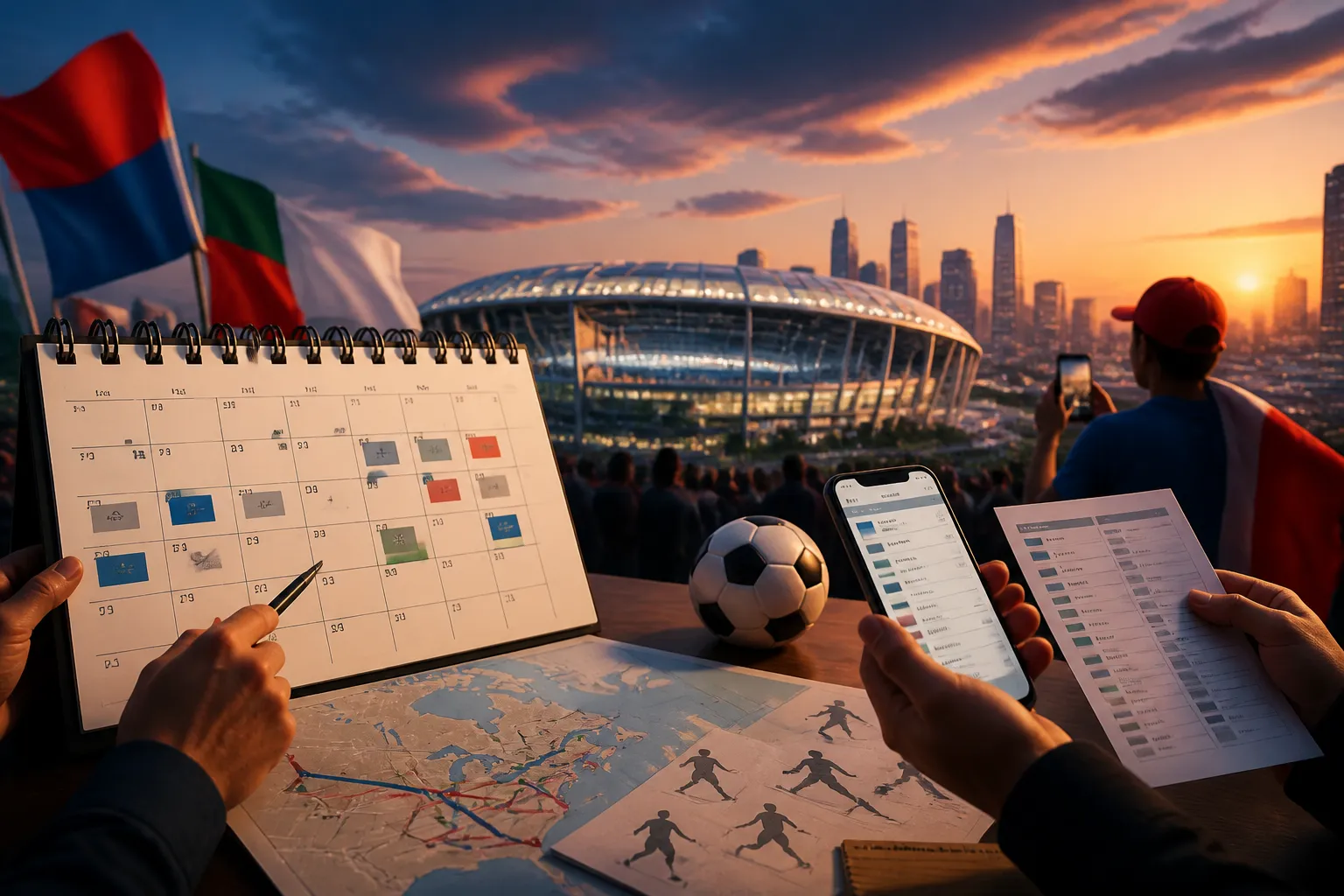






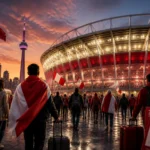


FIFA has officially revealed the full match schedule for the 2026 World Cup after the Final Draw, turning a broad tournament outline into a clear plan for teams, hosts, and traveling supporters. The expanded competition will span 104 matches in total, including 72 group-stage games, as FIFA works to balance competitive fairness with the realities of a larger, three-country event.
The headline dates are now fixed: the tournament opens on Thursday, 11 June 2026, in Mexico City at Estadio Azteca, and it concludes on Sunday, 19 July 2026, in New York New Jersey. FIFA says the schedule was built to reduce travel and give teams and fans more rest days, while also protecting competition integrity on the final group-stage matchdays.
For readers tracking the tournament from North America or abroad, the release matters because it does more than name the opening and closing venues. It confirms how FIFA has structured the group stage, where the host nations will play, and why some matches will kick off at the same time. That combination will shape travel planning, television viewing, and the competitive stakes in the final round of group games.
What FIFA Confirmed
FIFA’s schedule reveal follows the Final Draw and finalizes the tournament map for the 2026 edition. According to FIFA, the World Cup will feature 104 matches overall, with 72 of those coming in the group stage across 16 venues.
That scale is one of the defining features of the tournament. The expanded format creates more matchdays, more movement across host cities, and more pressure on organizers to keep rest periods manageable for teams while still delivering a coherent calendar for fans.
The official release also confirms that the schedule includes built-in competitive safeguards. In practical terms, that means FIFA has aligned the fixture list so that the tournament’s final group-stage games preserve fairness across the groups rather than allowing one team to benefit from a later result already known elsewhere.
Opening Match and Final
Mexico City will host the opening match on Thursday, 11 June 2026, at Estadio Azteca, one of the most recognisable stadiums in world football. The venue choice gives the tournament a historic launch point in the Mexican capital and ensures the first whistle of the 2026 World Cup will come on home soil for one of the co-hosts.
At the other end of the schedule, the final is set for Sunday, 19 July 2026, in New York New Jersey. FIFA’s decision locks in the closing stage of the tournament at a major metropolitan destination with the capacity to stage the biggest match of the competition.
Those two dates now frame the World Cup’s timeline from start to finish. For fans, they also offer a practical anchor: the opening match begins the tournament’s rhythm, while the final closes a six-week stretch that will move through multiple venues and time zones.
Host Nations and Home Soil Advantage
One of the most useful details in FIFA’s schedule release is the confirmation that Canada, Mexico, and the United States are scheduled to play their three group-stage matches on home soil. That arrangement matters both competitively and logistically.
Playing at home can reduce long-haul travel, limit unfamiliar conditions, and increase local support. In a tournament spread across three countries, that advantage is especially significant because the schedule appears designed to keep the hosts centered within their own regions during the group stage.
For supporters, the home-soil commitment also improves the event experience. Fans in Canada, Mexico, and the United States can plan around matches in their own country without waiting for a later-stage relocation to see their teams in person. FIFA’s structure therefore creates a clearer path for domestic attendance and more predictable travel planning.
It is also a reminder that the 2026 World Cup is being staged differently from the compact single-country tournaments many fans are used to. The host-nation arrangement is a major reason the schedule needed to be carefully sequenced after the draw rather than simply filled in at the end.
Why Simultaneous Kickoffs Matter
FIFA also said matches in the same group will be played simultaneously on the final group-stage matchdays. That detail may sound technical, but it is central to tournament integrity.
When two or more teams in the same group are playing at the same time, none of them can gain an unfair advantage by knowing a result that might influence tactics, urgency, or risk-taking. It is a standard principle in major tournaments, and in a larger World Cup it becomes even more important because the number of teams and match combinations increases.
For fans, simultaneous kickoffs can make the final group-stage days more dramatic. Instead of watching one team play with a known qualification scenario, viewers can see all the relevant games unfold together, with standings changing in real time. That format tends to create higher tension and, often, clearer competitive balance.
FIFA’s decision also underlines how the expanded 104-match tournament has to be managed carefully. More matches mean more moving pieces, and the final group-stage window is where fairness concerns are most likely to arise if the schedule is not tightly coordinated.
Travel, Rest, and Fan Planning
According to FIFA, the schedule was designed to reduce travel and maximize rest days for teams and fans. That goal is especially relevant in a tournament that stretches across 16 venues in Canada, Mexico, and the United States.
For teams, shorter travel windows can help preserve recovery time between matches. In a tournament format with a busy group stage, rest can influence preparation, training, and the ability to handle different climates and conditions from one host city to another.
For fans, the practical effect is just as important. A more travel-efficient schedule can make it easier to attend multiple matches, follow a team through the group stage, or plan a trip around one host country rather than several. That is particularly useful for supporters in North America who may be balancing work schedules, long distances, and varied time zones.
Time-zone planning will matter throughout the tournament, especially for viewers outside the host region. While the official schedule reveal confirms the venues and framework, the best viewing time for any specific match still depends on the host city and the local kickoff time assigned by FIFA. Readers should therefore check the finalized fixture listing for the exact local times relevant to their city and time zone.
At a broad level, the opening in Mexico City and the final in New York New Jersey create a tournament that moves from Central Time and Mountain/ Pacific-adjacent regional planning in parts of the host footprint to Eastern Time on the final weekend, depending on venue. That variety is part of the logistical challenge FIFA has built the schedule to address.
What Happens Next
With the schedule now revealed, the main next step is for teams, federations, broadcasters, and traveling supporters to organize around the confirmed dates and venues. The broad architecture of the tournament is set: 104 matches, 72 group-stage games, 16 venues, a Mexico City opener, and a New Jersey final.
What remains most important for fans is how each group line-up translates into specific match timing and travel patterns. FIFA has already signaled that simultaneous final group-stage kickoffs will protect competitive integrity, but the exact rhythm of each group will only fully settle as followers map the schedule onto their own time zones and travel plans.
For now, the clearest takeaway is simple: the 2026 World Cup is no longer just a draw and a list of teams. It is a fully framed tournament calendar, and the next phase begins with planning for June 11 in Mexico City.