









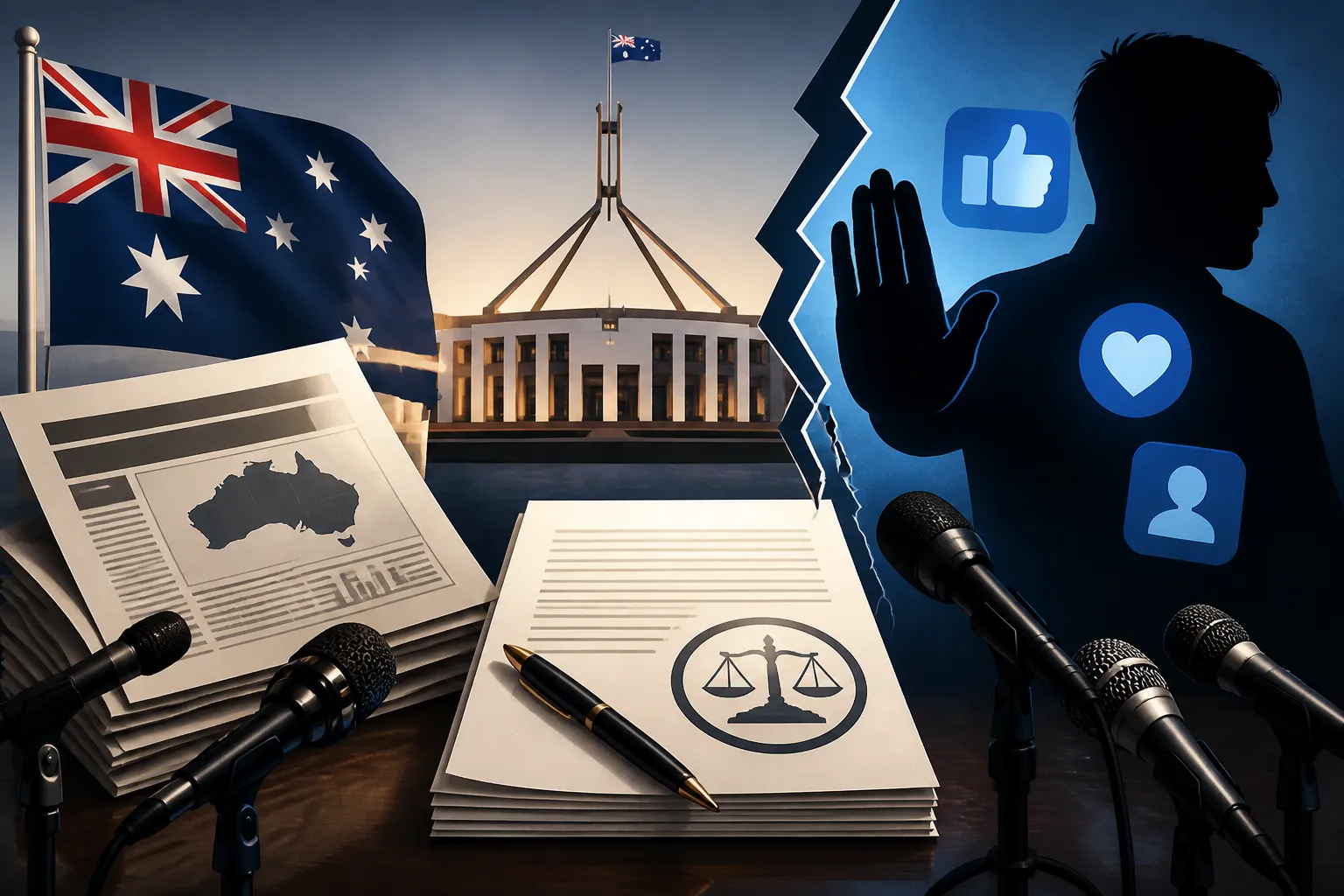
Australia has opened one of its most closely watched media policy debates in years: a draft News Bargaining Incentive that would pressure major digital platforms to pay for news or face a revenue-linked charge. Treasury opened consultation on 28 April 2026, following earlier material released in late 2025, setting up a dispute that now extends beyond media policy into trade and competition questions.
The proposal is designed to encourage platforms to make or renew commercial deals with eligible news publishers. Under the draft, companies that do not strike those deals could face a charge tied to their Australian revenue, while platforms that do make deals may receive offsets. That basic structure is what has drawn strong criticism from Meta, which on 4 June 2026 called the proposal discriminatory.
The debate matters because Australia has been trying to shape a market in which large digital platforms benefit from news content while publishers argue they need compensation to support journalism. But the proposal is still in consultation, the draft consultation window ran until 18 May 2026, and the measure has not become law. For now, it is a policy process with unresolved legal, commercial, and diplomatic questions.
How the proposed incentive works
The draft News Bargaining Incentive is built around a simple idea: encourage platform-to-publisher deals by making the alternative more expensive. Treasury’s proposal would apply to major digital platforms, with the aim of pushing them to make or renew commercial arrangements with eligible news businesses.
If a platform reaches those deals, it could receive offsets. If it does not, it could face a charge linked to its Australian revenue. In practical terms, that means the proposal is not a direct newsroom subsidy and not a blanket tax on all online activity. It is a conditional mechanism aimed at changing the commercial incentives for the largest platforms that distribute news or derive value from it.
That distinction matters. Supporters of the concept see it as a way to reduce the incentive for platforms to avoid payment by cutting off news altogether, which has been one of the flashpoints in earlier negotiations. The draft is framed as a response to that behavior, not as a general levy on internet use.
The consultation material released by Treasury in late 2025 and the draft legislation published for the 2026 consultation suggest the government wants a system that is more predictable than ad hoc bargaining. But because the proposal is still under review, the detailed mechanics, final scope, and any exemptions remain part of the policy debate rather than settled law.
Why Meta is pushing back
Meta’s objection rests on two points. First, the company said the proposal is discriminatory. Second, Reuters reported that Meta argued the measure breaches the Australia-U.S. free trade agreement and could prompt possible U.S. trade action. Those are serious claims, but they are still allegations made by Meta, not findings by a court or a formal ruling by any government.
From Meta’s perspective, the issue appears to be that the draft incentive would treat certain digital platforms differently depending on whether they strike news deals. In the company’s reading, that creates an uneven commercial burden. Whether that amounts to discrimination in a legal sense has not been determined.
The company’s trade argument is also not the same thing as a formal dispute. A claim that a policy may conflict with a free-trade agreement is a political and legal warning, not proof that an agreement has been breached. There is no verified evidence that the U.S. government has launched formal trade proceedings over the proposal.
That distinction is important for readers trying to separate advocacy from outcome. Meta can argue that the plan is unfair or inconsistent with trade commitments. But until a government takes official action or a legal body makes a finding, the matter remains unresolved.
What the trade argument means
At a high level, the Australia-U.S. free trade agreement is meant to reduce barriers and create clearer rules for commerce between the two countries. In disputes like this, the question is usually whether a policy treats foreign firms unfairly, distorts competition in a protected way, or otherwise conflicts with agreed trade obligations.
That does not automatically mean every tax, levy, or regulatory charge is illegal. Governments routinely design sector-specific rules, and those rules can survive legal scrutiny if they are structured and justified in the right way. The key point is that legality depends on the precise wording, purpose, and application of the measure.
For the News Bargaining Incentive, the trade angle is being raised because the proposal targets major digital platforms, many of which are U.S.-based. That makes the policy more sensitive than a domestic media measure alone. It also means the Australian government may need to show that the incentive is a neutral economic rule linked to local market objectives, rather than a measure designed to single out foreign companies.
That issue is still open. No formal legal finding has established that the draft incentive breaches the free trade agreement, and any claim that it is definitely unlawful remains unproven without that process.
From the News Media Bargaining Code to the draft plan
The current debate builds on the earlier News Media Bargaining Code, which made Australia one of the first countries to require bargaining around the value of news on digital platforms. That earlier framework changed how governments and platforms talk about payment for journalism, even as the details of each deal varied.
The history matters because the new proposal is framed as a reaction to a problem that surfaced under the earlier system: platforms could avoid paying by removing news from their services. In other words, the government is not starting from scratch. It is trying to improve a bargaining model that already existed.
The timeline helps explain why this is now a business policy story as much as a media story. In 2021, the bargaining code set the broader precedent. By 2024, Meta’s relationship with news deals had already changed, reflecting the fragility of platform-publisher arrangements. By 2026, Treasury had returned with draft legislation that tries to make the bargaining incentive more durable through a structured charge and offset system.
That sequence shows how the issue has moved from one-off negotiations to a more formal policy architecture. It also shows why publishers, platforms, and trade watchers are all treating the consultation closely: each phase has changed the negotiating leverage on both sides.
What happens next
The immediate next step after consultation is for the government to review submissions and decide whether to revise the draft before moving forward. Because the consultation window ended on 18 May 2026, attention now turns to whether Treasury and ministers keep the current structure, narrow it, or alter the revenue-linked charge and offset rules.
If the proposal advances, it would still need to move through the normal legislative process in Parliament. That means the draft is not yet a final policy outcome, and business groups, media companies, and platform operators would still have more chances to press their case.
For publishers, the practical question is whether the incentive would create more stable revenue from platform deals. For platforms, the question is whether the proposal changes the cost of carrying news enough to alter product decisions, bargaining strategy, or local investment. Those effects are possible, but they are not yet proven.
The unresolved issue is straightforward: can Australia design a bargaining framework that encourages payment for news without triggering a broader trade fight or creating a legal challenge strong enough to derail the plan? That question now sits at the center of the debate, and the answer will depend on the final shape of the legislation, not just the criticism surrounding it today.