









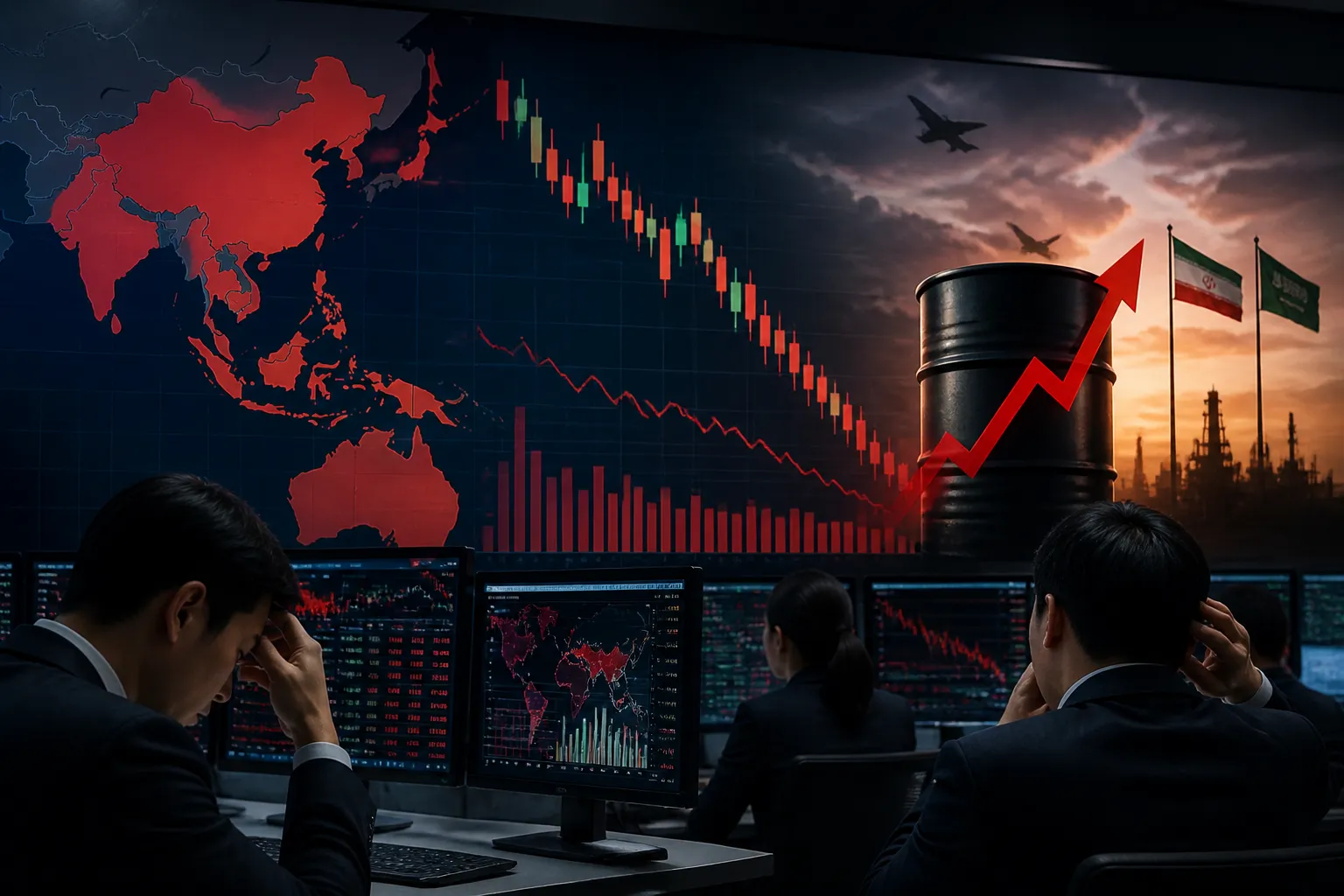
Asian markets started the week under pressure as investors pulled back from technology and semiconductor shares after a sharp overnight selloff on Wall Street. The decline came alongside renewed concern over Middle East tensions, which helped lift oil prices and added another layer of uncertainty to an already fragile market mood.
AP reported that Asian shares fell after Big Tech stocks sank and Wall Street had its worst day in months. Reuters also tied the move to a broader global tech rout, saying investors were pausing an AI and semiconductor rally that had run strongly for two months before the latest reversal.
The result was a familiar market pattern: when growth and risk appetite weaken in the U.S., the pressure often travels quickly into Asia. On this occasion, the move was magnified by geopolitics, with energy prices and interest-rate expectations pulling in the same direction.
How the Selloff Unfolded
The sequence matters. Reuters reported on June 5 that European shares had already slipped as Middle East tensions lingered and tech stocks paused after a strong two-month rally. That gave markets an early warning that the easy part of the rebound in growth stocks may have been over.
By June 8, the pressure had intensified. AP said Asian shares fell after a steep drop in Big Tech stocks helped push Wall Street to its worst day in months. That U.S. weakness became the trigger for the next session in Asia, where traders were left to reassess valuations and risk.
In broad terms, this was not a single-country event or a one-off reaction to one corporate report. It looked more like a cross-market reset, with investors simultaneously responding to weaker sentiment in the U.S. and rising geopolitical strain elsewhere.
Why Tech and AI Shares Were Hit
The immediate market story was about de-risking in technology, especially in areas tied to artificial intelligence and semiconductors. Those names had been among the strongest performers in recent months, so they also became some of the first targets when investors decided to take profits or cut exposure.
Reuters described the move as a pause in the AI and tech rally after a strong two-month advance. That matters because rallies built on expectation can become vulnerable when even a modest change in sentiment prompts investors to question whether earnings, spending plans or valuations have moved too far, too fast.
Semiconductor shares are especially sensitive because they sit at the center of the AI buildout. When traders grow cautious on the broader theme, suppliers, equipment makers and chip designers can all come under pressure at the same time, even if their individual business outlooks have not changed materially.
This kind of selloff does not automatically mean the tech cycle is over. But it does signal that the market may be moving from a phase of broad enthusiasm into one where investors demand clearer proof that the AI trade can support prices already reflected in the market.
How Middle East Tensions Fed the Move
The second force was geopolitical. Reuters and AP linked the Asian selloff to renewed Middle East conflict fears, which pushed oil prices higher and weighed on sentiment. That connection is important because energy prices can affect both inflation expectations and central-bank policy outlooks.
When oil rises quickly, traders begin to think about whether inflation could stay sticky for longer. If that happens, interest rates may remain elevated for more time than investors had expected, which tends to put pressure on growth stocks, especially high-valuation technology names.
That transmission mechanism is one reason oil matters far beyond the energy sector. A jump in crude can ripple through transport, manufacturing and consumer costs, and markets often react long before those effects show up in official data.
There is also the broader risk sentiment channel. Escalating conflict, even without a direct economic disruption, can push investors toward safer assets and away from equities that depend on steady growth and low-rate assumptions. In this case, the market response reflected both of those concerns at once.
Which Asian Markets Faced Pressure
AP reported a broad decline across Asian shares, while Reuters said Asian markets plunged as investors stepped back from the tech rally. The exact depth of moves varied across regional benchmarks, but the direction was consistent: risk appetite faded first in the markets most closely tied to global technology and manufacturing cycles.
Japan, South Korea and Taiwan are often watched closely in moments like this because their equity markets carry heavy exposure to chipmakers, electronics exporters and suppliers connected to the global hardware cycle. When U.S. tech weakens, those markets can react quickly because their earnings outlooks are linked to the same investment themes.
Hong Kong and mainland China-listed technology names can also be sensitive to the same forces, though the local drivers can differ. In a market driven by global semiconductor sentiment, even unrelated names may move in the same direction if investors are reducing exposure broadly.
Currency moves can add another layer, though the verified reporting provided here does not specify individual foreign-exchange levels. In practice, when equities weaken and oil rises, traders often watch regional currencies closely for signs of stress or changing rate expectations.
What It Means for Investors
For investors, the main takeaway is that this looks like a risk-off session rather than an isolated correction in one stock or one market. The combination of a U.S. tech pullback, a pause in the AI rally and geopolitically driven oil strength suggests the selloff is being driven by multiple forces, not just one headline.
That matters because the response to a multi-cause move can differ from the response to a narrow earnings miss. If the issue is valuation and positioning, the pressure may remain concentrated in the most crowded areas of the market. If oil keeps rising and inflation expectations worsen, the impact could spread more widely into rate-sensitive sectors.
For now, the prudent reading is that markets are testing how much of the recent tech advance depended on smooth conditions. A short-term correction would leave the longer trend intact but reset expectations. A broader rotation out of tech would mean investors are becoming more selective about where future earnings growth is likely to come from.
This article is not investment advice, and the market picture remains fluid. The verified reporting supports a cautious view: the decline is real, market-moving and tied to a broader global rerating, but it is still too early to say whether it marks the start of a lasting shift or only a fast unwind of an overheated trade.
What to Watch Next
The next sessions will show whether the pressure stays concentrated in technology and semiconductors or spreads into other parts of the market. If U.S. futures and European markets continue to echo the move, that would suggest the correction is becoming more global rather than region-specific.
Investors will also be watching oil closely. If energy prices remain elevated, the inflation and rate narrative could keep weighing on equities, especially in sectors that depend on cheaper capital.
One unresolved issue is how much of the geopolitical risk is already priced in. The verified reporting confirms that Middle East tensions are feeding sentiment, but the exact market impact will depend on whether the conflict escalates further or stabilizes. Until that becomes clearer, the safest reading is that Asia is trading in the shadow of both a tech reset and a geopolitical shock.