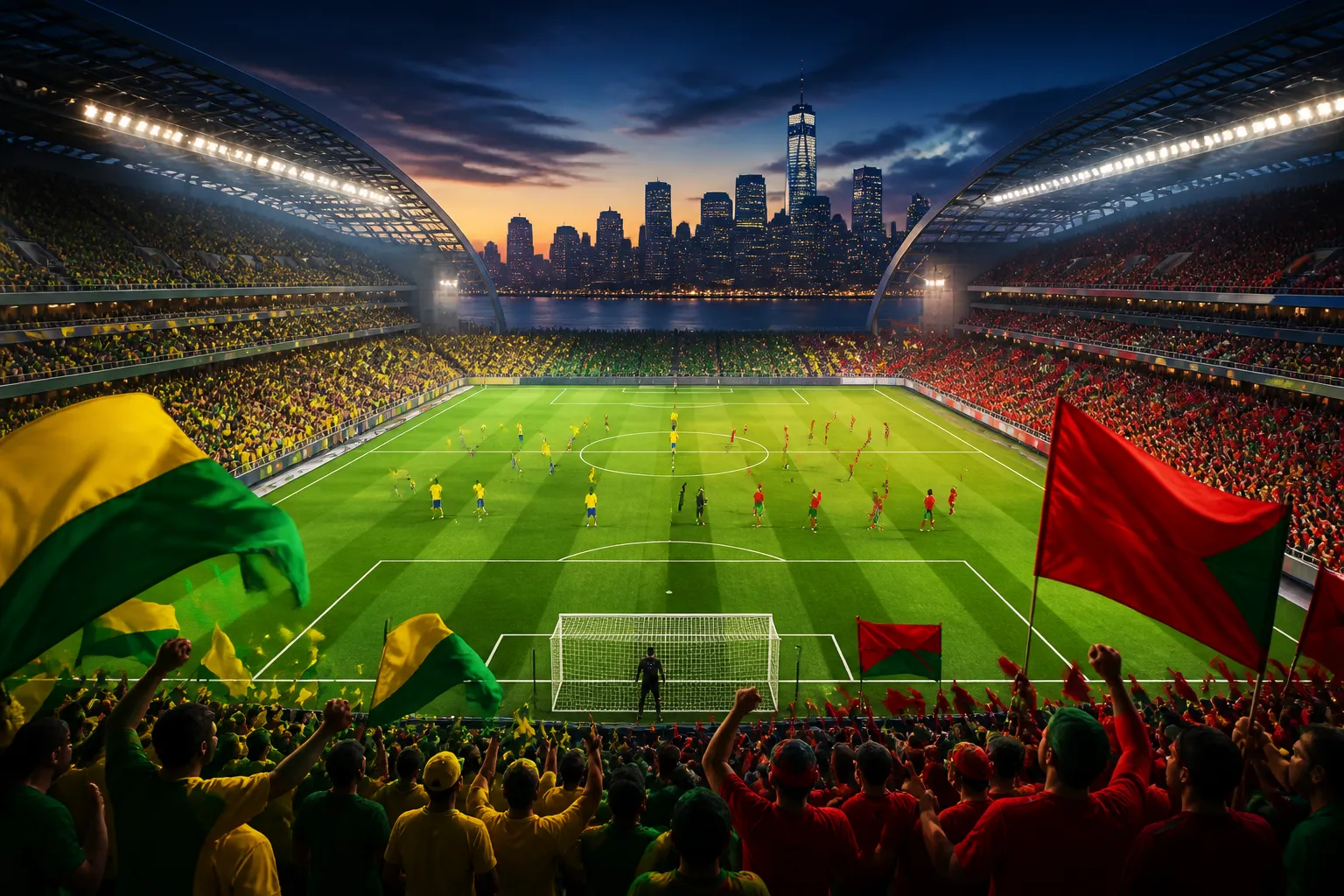










The FIFA World Cup 2026 begins with a headline fixture that immediately sets the tone for the tournament: Mexico vs South Africa at Mexico City Stadium. FIFA’s official schedule lists the match as the opening game of Group A on Thursday, June 11, 2026, and AP reported from Mexico City as the tournament got under way.
For the hosts, this is more than a ceremonial first kick. FIFA says Mexico will open the tournament at home and play all three of its group matches on home soil, a significant edge in travel, atmosphere, and familiarity. For South Africa, it is a chance to spoil the party on one of the biggest stages in world sport.
The opening match also offers an early look at how the expanded 48-team World Cup will feel in practice. With more nations in the field and a broader first phase, every result in Group A carries extra weight, especially for a host side expected to navigate immediate pressure in front of a home crowd.
Opening Match Context
FIFA’s matchday preview identifies Mexico-South Africa as the opening match of the 2026 World Cup, and the official schedule places it at Mexico City Stadium on Thursday, June 11, 2026. The supplied material does not confirm a kickoff time, so the timing should be treated as unconfirmed unless later verified by FIFA or official match reporting.
AP’s report from June 11, 2026, also confirms the significance of the occasion: Mexico opened the tournament against South Africa in Mexico City as the World Cup began. That makes this not just the first match for two teams, but the first competitive chapter of the entire tournament.
Opening matches tend to be shaped by emotion as much as tactics. The host nation carries expectation, the opponent carries the opportunity to disrupt the script, and the setting often amplifies every early mistake or moment of quality. That is especially true when the match launches a World Cup being staged across Mexico, the United States and Canada.
Mexico’s Home Advantage
Mexico’s most notable edge is simple: familiarity. FIFA says the team will play all three group matches on home soil, removing one of the biggest challenges in major tournaments — the constant adjustment to airports, time zones, hotel changes and new stadium environments.
Playing the opener in Mexico City also gives Mexico an immediate chance to set the emotional pace of the tournament. A strong start can settle nerves, energize the crowd and create momentum before the group stage reaches its middle stretch. A difficult start, by contrast, can put the hosts under pressure almost immediately.
Mexico City Stadium is significant not only because it is the venue for the first match, but because opening a World Cup there places the city at the center of global attention. AP’s coverage of the opening ceremony underlined the spectacle around the start of the event, and the match itself extends that spotlight from pageantry to competition.
For fans in the stands and those following from home, the host-nation setting matters. The atmosphere around an opening game often becomes part of the story, with local energy and national expectation shaping how the match is experienced even before the first whistle.
What South Africa Brings
South Africa’s role in the opener is to handle the environment and turn it into a competitive opportunity. A tournament opener against the host nation is rarely routine, because the opponent is not just a team — it is the first challenge to the event’s narrative.
That means South Africa enters with a clear strategic task: stay organized, absorb the early energy of the stadium and avoid giving Mexico an easy emotional lift. In opening matches, discipline and composure are often as important as attacking ambition, especially when a home crowd is driving the momentum.
While the supplied material does not include lineup details, injuries or confirmed tactical plans, the basic assignment is clear. South Africa needs a stable first phase, enough attacking threat to force Mexico to defend, and the confidence to treat the occasion as a competitive match rather than a ceremonial one.
If South Africa can frustrate the hosts early, the pressure inside the stadium can shift. That is often the thin margin in tournament openers: one side plays into expectation, the other plays into possibility.
Group A Implications
This match matters beyond the opening night because it is the first Group A fixture of the World Cup 2026. FIFA’s official preview identifies it as the group opener, which means the result will shape the early table and the mood around the entire section.
The broader Group A picture also includes Korea Republic and Czechia, and Mexico’s start will be watched with an eye on how the group could unfold from here. In a World Cup group, an opening win can create breathing room for the remaining matches, while a draw or defeat can turn the next outing into a high-pressure test.
That matters even more in a tournament with an expanded 48-team format. More teams does not mean less pressure; in many cases, it means the early matches become even more important because they help define who can settle in quickly and who must chase the standings from the start.
For Mexico, the stakes are obvious: protect home advantage and avoid carrying unnecessary pressure into the next two group games. For South Africa, an opening result away from home can immediately change the tone of its campaign and alter how the rest of Group A approaches the section.
What to Watch Next
With no verified scoreline, scorers or lineups included in the supplied material, the safest live takeaway is that the match should be followed for three things: whether Mexico uses the home crowd to start fast, whether South Africa can keep the game compact, and how the result reshapes the early Group A table.
The next confirmed piece of context is the group sequence itself. FIFA says Mexico will play all three group matches at home, so this opener is the first of three chances for the hosts to bank points without leaving the country. That schedule advantage could become one of the tournament’s quieter but most important storylines.
For readers tracking the tournament as a whole, this match is also the first real test of the World Cup 2026 format on opening day. The combination of host-nation pressure, a new expanded field and a high-profile venue makes Mexico vs South Africa one of the most important fixtures on the first day — even before the result is known.
The unresolved issue, and the one that will define the immediate aftermath, is how Group A looks once the match is complete. Until official match reporting confirms the outcome, the key story remains the start itself: the hosts at home, South Africa on the road and World Cup 2026 officially underway in Mexico City.