









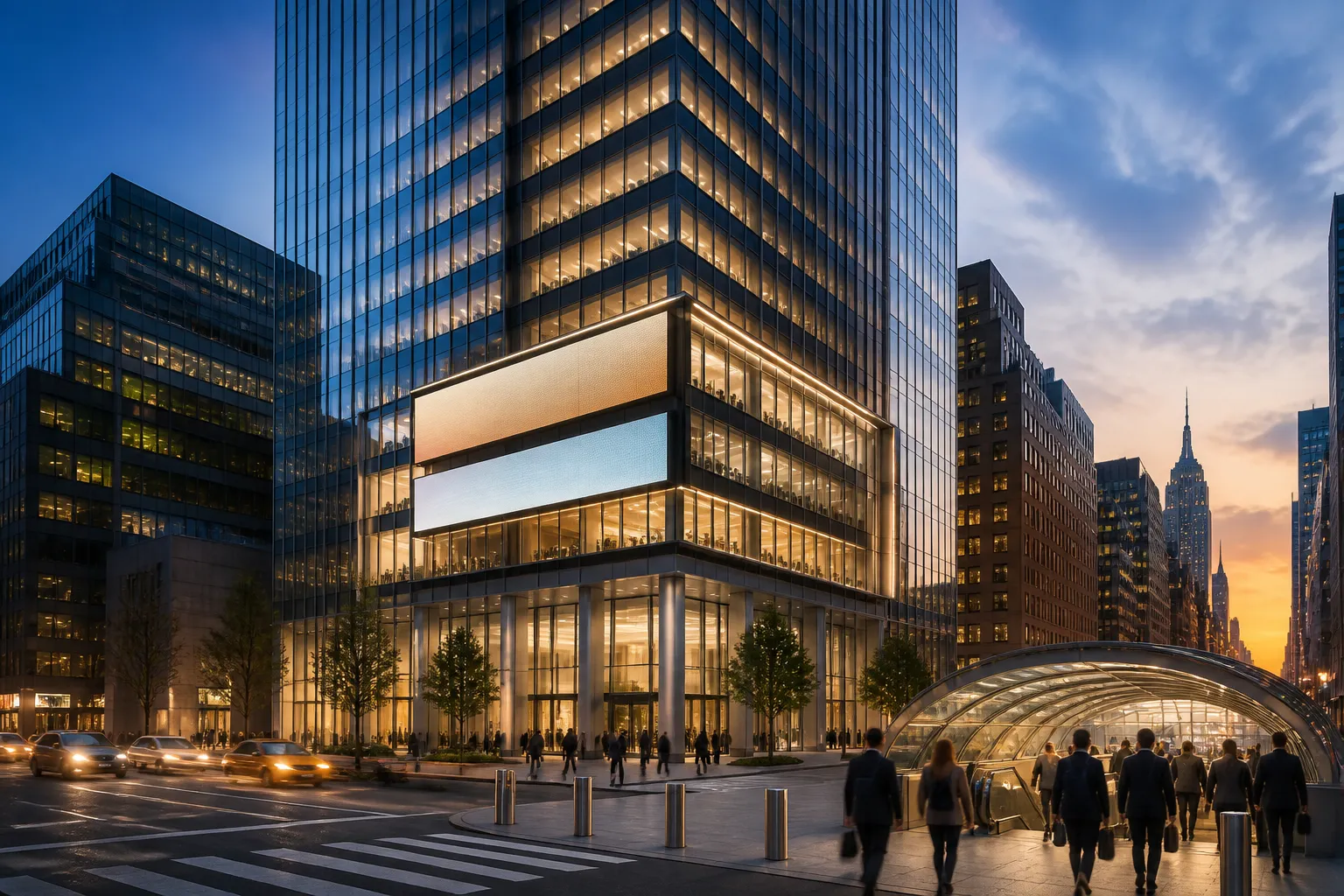
Vornado Realty Trust said on June 9, 2026 that PENN 2 is now 90% leased after signing two full-floor office deals with Veeva and Altana. The announcement gives the 31-story tower a fresh leasing milestone and adds another sign of demand for large, transit-linked offices in Manhattan’s Penn District.
The new leases are substantial even by Midtown standards. Veeva’s deal covers 62,223 square feet for 12 years, while Altana’s lease spans 62,309 square feet for 10 years, according to Vornado’s release. Both companies are taking full floors, a detail that matters because it points to the kind of block-by-block leasing that can stabilize a major office redevelopment.
The tower’s momentum also builds on Verizon’s earlier commitment. Verizon announced on July 28, 2025 that it would open its Manhattan headquarters at PENN 2 and occupy more than 195,000 square feet, giving the property a high-profile anchor before these latest leases were signed.
What Vornado Announced
Vornado said PENN 2 has reached 90% leased after adding Veeva and Altana as tenants. The company’s June 9 announcement placed the leases in the building at a key point in its leasing cycle, with two large office commitments filling out a tower that sits above Penn Station in Midtown Manhattan.
PENN 2 is a 31-story office tower in the Penn District, the broader redevelopment zone surrounding one of the busiest transportation hubs in the city. The building’s location is central to the story because it is not just another Midtown office address; it is part of a district that has been marketed around access, visibility, and proximity to transit.
The new deals are both full-floor leases, which usually signals that tenants want a significant, contiguous footprint rather than a smaller collection of suites. That can be important for how an office building is assembled over time, especially in a market where many tenants have been cautious about their long-term space needs.
Why PENN 2 Matters in Midtown
PENN 2’s leasing progress is relevant because it sits at the intersection of several office-market themes: the appeal of trophy buildings, the draw of transit access, and the continuing preference of some tenants for high-quality, flexible, centrally located space. Vornado’s update does not prove a broad recovery across Midtown, but it does show that a well-positioned tower can still attract large commitments.
The Penn District has been one of Manhattan’s most closely watched redevelopment areas for years. Landlords there have tried to turn the concentration of rail, subway, and commuter traffic into an office advantage, especially for firms that value convenience for employees who travel from different parts of the region.
That strategy matters in a market that remains uneven. Some buildings continue to face slower leasing or heavier concessions, while others with newer amenities and strong transit links have been able to secure major tenants. PENN 2 now belongs in the latter conversation, though the announcement alone does not reveal pricing terms or the full economics of the deals.
The 90% leased figure is also notable because it suggests that most of the building has already been spoken for. Even so, that is not the same as saying the tower is fully leased, and it does not guarantee that the remaining space will be filled immediately.
Timeline of Leasing Moves
The leasing story at PENN 2 has built over time rather than arriving all at once. Verizon’s 2025 headquarters announcement was an important early marker because it established the tower as a destination for a major corporate user and gave the property a prominent tenant identity.
By the time Vornado announced the Veeva and Altana deals, the tower had already benefited from that earlier commitment. Large anchors often matter in office towers because they change the perception of a building from speculative redevelopment to a functioning corporate destination.
The latest milestone also reflects the pace at which some office landlords have been able to sign full-floor tenants in high-profile locations. Those deals are often harder to piece together than smaller leases, but they can do more to solidify a building’s occupancy profile and help shape the mix of future users.
Independent coverage also reported the two new leases and the 90% leased milestone, underscoring that the announcement landed as a meaningful leasing update rather than a routine tenant note.
What the New Tenants Suggest
Veeva and Altana add another layer to the building’s tenant mix. While the verified material does not spell out their broader workplace strategies, the companies’ decision to take full floors in PENN 2 suggests they are comfortable committing to a sizable footprint in a transit-heavy part of Midtown.
That is useful context for understanding the kinds of firms that continue to seek offices in premier Manhattan properties. Even as many companies have adopted more flexible workplace policies, some still want a presence that can support in-person collaboration, recruiting, and client-facing work. Buildings like PENN 2 are designed to capture that demand.
The market also tends to reward locations that reduce friction for employees. Penn Station offers access to regional rail and multiple subway lines, which can make a difference for companies with workers coming from outside Manhattan or across the broader tri-state area.
In that sense, the leases are not just about square footage. They also reflect how location, building quality, and access can outweigh the broader caution that still shapes much of the office market.
What to Watch Next
The immediate question is how much space remains available and what kind of tenant could take it. Vornado has said PENN 2 is 90% leased, which means a relatively small share of the tower is still open, but the company has not publicly laid out a timetable for filling the remaining space.
What happens next will matter for more than the landlord’s occupancy figures. A nearly full tower can strengthen the case for the Penn District redevelopment strategy, which has long depended on turning a transportation hub into a stronger office address.
It is also worth watching whether PENN 2 continues to attract firms in sectors that have shown interest in dense, transit-accessible Manhattan locations, including technology and AI-oriented businesses. The verified material does not identify the next likely tenant, and any forecast about the final lease-up would be speculative.
For nearby businesses, the leasing progress is a sign that the building is becoming more fully active as a workplace destination. For commuters, it reinforces the idea that Penn Station-adjacent office space still has a role in Manhattan’s office map, even if the broader market remains mixed.
The unresolved issue is simple: how quickly the last portion of the tower can be leased, and on what terms. Until Vornado provides another update, the best-supported takeaway is that PENN 2 has made a substantial leasing advance, not that it has crossed the finish line.