








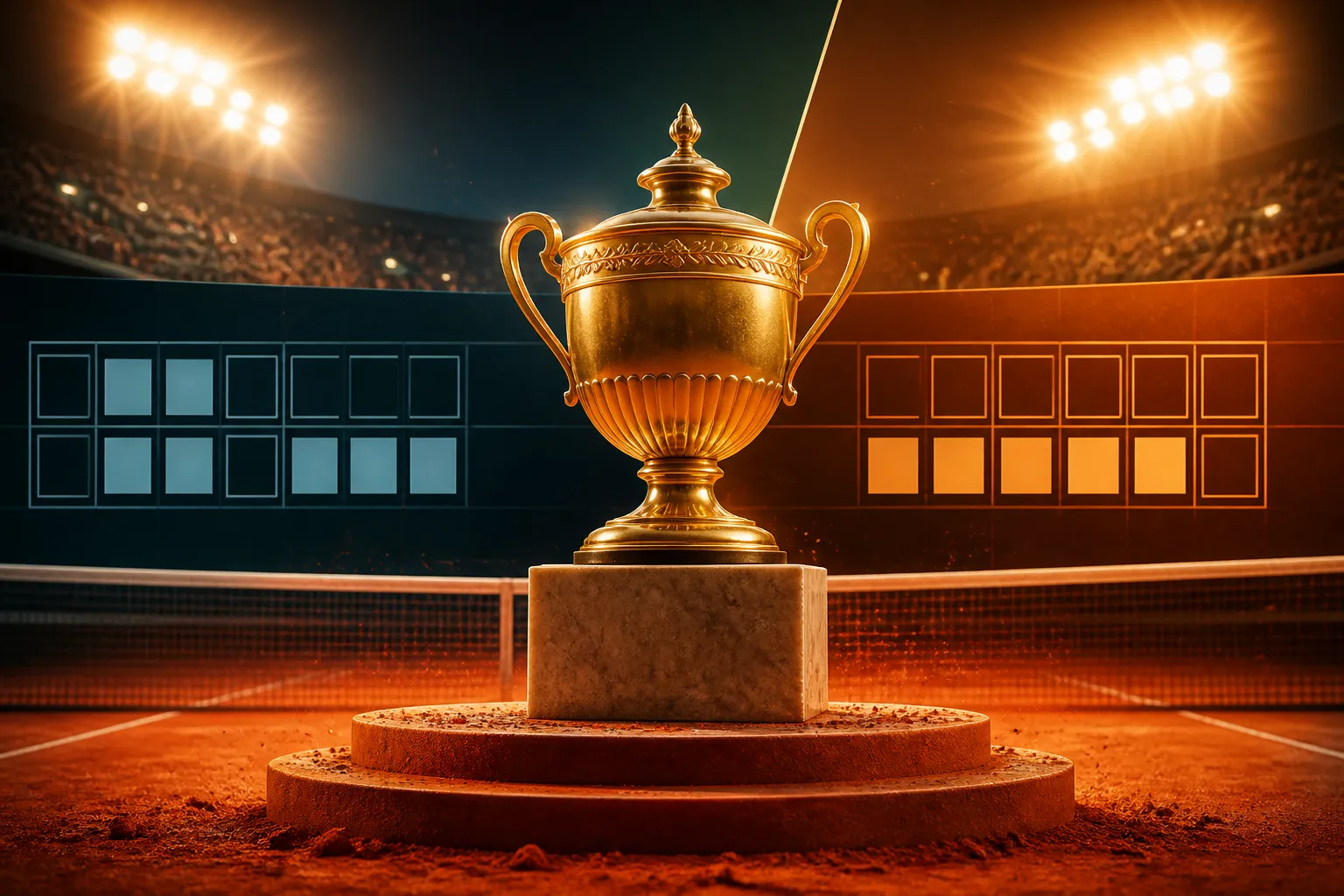
Alexander Zverev finally turned years of expectation into a Grand Slam title on Sunday at Roland-Garros, defeating Flavio Cobolli in the 2026 French Open men’s singles final. The match finished 6-1, 4-6, 6-4, 6-7(5), 6-1, a scoreline that captured how quickly control shifted before Zverev pulled away in the deciding set.
The result ends one of the sport’s longest-running questions: when would Zverev convert elite talent into a major title? The answer came on clay in Paris, on a day when the final also reflected how unpredictable this year’s French Open had become. Cobolli’s run to the championship match was not the expected storyline, and it made the final feel bigger than a simple title decider.
Zverev’s Breakthrough Finally Arrives
Zverev’s first Grand Slam title was notable not only because it came in Paris, but because it completed a long arc of near-misses at the biggest events. Reuters and AP both reported the result within hours of the final, and Roland-Garros’ official coverage confirmed the matchup and live result as the match unfolded.
For Zverev, the significance is straightforward. He has been one of the leading figures on the men’s tour for years, regularly positioned among the players expected to contend at majors, yet the final step had remained out of reach until this tournament.
That distinction matters. Winning a Slam is not simply another title on a resume; it changes how a player’s season is judged, how opponents frame future meetings, and how a career is remembered. Zverev had lived with the label of a top player without a major crown. In Paris, he finally removed it.
How Cobolli Reached the Final
Cobolli’s presence in the championship match was one of the more surprising elements of the tournament. The Italian was not the obvious pre-event favorite to reach the final, which is precisely why his run stood out in a chaotic Roland-Garros that did not follow a rigid script.
That kind of breakthrough can happen when a player strings together steady form over two weeks on clay. Roland-Garros rewards resilience, patience, and the ability to handle shifting momentum across five-set matches. Cobolli proved he belonged in the final by getting there, and that alone makes this French Open more memorable than a routine title run by an established favorite.
Even in defeat, his run has value. Reaching a Grand Slam final usually changes perception quickly, especially for players outside the group that routinely appears in the closing weekend of majors. Whether this proves to be a one-off surge or the start of a deeper rise will be one of the questions left by Paris.
What Decided the Final
The match moved in distinct phases. Zverev started strongly, taking the opening set 6-1 and establishing control early. Cobolli answered by taking the second set 6-4, which shifted the tone and showed that the final would not be a straight path.
Zverev then regained the edge by winning the third set 6-4, putting him a set away from the title. At that point, the final looked as if it might settle into a familiar pattern: one player controlling the middle stages and closing with momentum.
Instead, Cobolli pushed the match into a fifth set by winning the fourth 7-6(5). That tiebreak was the hinge. Had Zverev finished the job there, the story would have been about a hard-fought but more compact title run. Cobolli’s resistance forced an extra layer of pressure, and that made the final set decisive.
The last set belonged to Zverev, who closed with a 6-1 finish. That margin suggests he managed the reset better than Cobolli after the long battle to force a fifth. In Grand Slam finals, the opening games of the deciding set often matter as much as the final score itself, and Zverev clearly handled that moment with authority.
Set by set, the shape of the final was clear: Zverev’s fast start, Cobolli’s response, Zverev’s recovery, Cobolli’s fightback, then Zverev’s control when it counted most. It was a match that tested both nerves and endurance, which fits the demands of Roland-Garros better than a short, one-sided final would have.
Why This French Open Matters
This final matters for more than the trophy. It changes the conversation around the men’s clay-court hierarchy, especially after a tournament that had already produced an unusual path to the last match. A French Open champion emerging from such a draw reshapes how the tour reads the balance of power on clay heading into the rest of the season.
For Zverev, the title can affect everything from confidence to future seeding dynamics and the pressure that follows him into the next majors. A first Slam often alters how a player carries himself under stress because the burden of “must win one” is gone. He can now compete with a different kind of freedom, even if expectations immediately rise again.
For Cobolli, a final at Roland-Garros offers a different kind of leverage. Even without the title, a run this deep can change the way players, coaches, and tournament draws view him. It can also translate into a stronger position in the broader season, where confidence on clay often carries into subsequent events.
The final also lands in a broader context for fans who follow the clay swing closely. Roland-Garros is the most demanding stop on the surface for many players, and a result like this can influence how the rest of the clay calendar is interpreted. It sets a benchmark for who is playing well now, not just who was favored in advance.
What Happens Next on the ATP Clay Swing
The immediate next step is simple: the men’s tour moves on, but the meaning of this result will linger. Zverev leaves Paris with the biggest title of his career, while Cobolli leaves with a surprise final appearance that may change the rest of his season.
One unresolved question is whether this breakthrough becomes a turning point or simply the end of a long wait. Major titles can reset a player’s trajectory, but they also create new expectations. Zverev now enters every remaining big event with the added weight and benefit of being a Slam champion.
Another open issue is how quickly Cobolli can convert this achievement into consistent results. Grand Slam finals often bring immediate attention, but the harder task is carrying that form forward when the tour shifts to new conditions and fresh opponents.
For now, though, the focus stays on Paris. Roland-Garros produced a final that mixed a long-awaited breakthrough with an unexpected challenger, and that is what gives this 2026 men’s title match lasting value.