








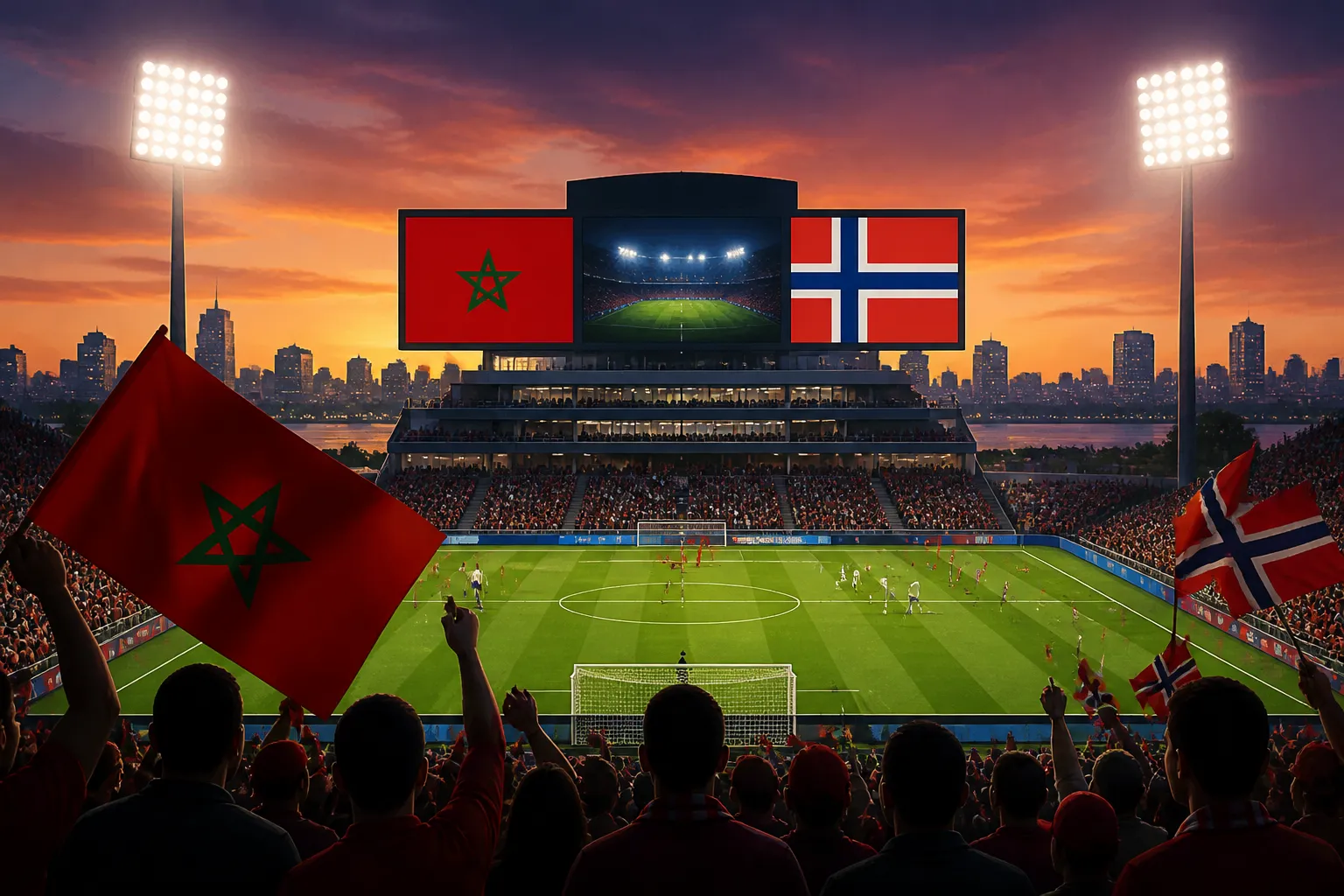
Morocco’s June 7 friendly against Norway now stands as one of the team’s last meaningful checkpoints before the 2026 FIFA World Cup begins. The match is scheduled for Sports Illustrated Stadium, also known as Red Bull Arena, in Harrison, New Jersey, with kickoff reported at about 3:00 p.m. local time, or 8:00 p.m. in Morocco.
That timing matters. Morocco open the World Cup on June 13 against Brazil, which leaves only a short gap between the final warm-up and the first group-stage test. In that narrow window, the Norway match is likely to serve as both a rehearsal and a final round of evaluation rather than a routine exhibition.
Reports around the fixture have also framed it as a lineup and squad test, but the most reliable takeaway is simpler: Morocco are using Norway to sharpen the team’s World Cup preparation. Any talk of a confirmed “strong starting XI” should be treated cautiously unless it comes from an official team announcement.
Where This Friendly Fits in Morocco’s Build-Up
Morocco’s pre-World Cup schedule has been built around match rhythm, squad assessment, and a gradual move toward tournament intensity. The Norway fixture is the last friendly before the team’s World Cup opener, which makes it more important than a standard late-cycle warm-up.
FIFA’s Morocco coverage confirms the team is among the World Cup participants and that the tournament begins on June 11, 2026. Morocco’s first group-stage match is set for June 13 against Brazil, meaning the Norway game falls in the final stretch before competitive play begins.
That short runway helps explain why this match is being watched closely. Coaches generally use this stage to settle on combinations, confirm fitness, and avoid unnecessary disruption. At the same time, a final friendly can expose gaps that were not visible earlier in the build-up.
Why Norway Is a Useful Opponent
Morocco’s choice of Norway fits the usual logic of a serious World Cup warm-up. A European opponent can provide a different tempo, structure, and physical test from the kinds of matches teams often use earlier in camp.
Independent coverage also described the game as a World Cup warm-up in the United States, which underscores the broader purpose of the trip: Morocco are not only preparing for Brazil on the pitch, but also adjusting to the travel, timing, and conditions they will face during the tournament cycle in North America.
For Morocco, a match like this can serve several functions at once. It can help the staff test shape under pressure, measure how the team handles transitions, and see whether players can keep their level across the full match. It can also offer a useful comparison against the earlier preparatory friendlies Morocco have already played as part of the buildup.
That wider schedule matters because World Cup teams rarely arrive at the tournament with every answer in place. They often need one final game, or two at most, to decide whether the balance of the side is right. Norway gives Morocco a controlled setting to do that without the stakes of a tournament fixture.
What the Match Can Reveal About the Squad
The most meaningful aspect of the Norway friendly is not whether a specific lineup has been leaked or speculated about. It is what the match may tell Morocco about the final shape of the squad and the roles still open for competition.
At this stage of preparation, several areas are often under review: who starts in central defense, how the midfield is balanced, and which attacking combinations are most reliable. Those are the types of questions a coaching staff typically wants answered before a World Cup opener, especially when only a few days remain before the first group match.
The verified material does not support claims that Morocco has officially settled on a particular “strong starting XI” for Norway. So the more useful way to view the fixture is as an evaluation point. If the staff rotates heavily, that may signal that they are still comparing options. If the side looks close to the expected tournament core, that may suggest the selection picture is narrowing.
There is also a tactical layer, but it should not be overstated. A friendly can hint at preferred patterns, yet it does not necessarily reveal a fixed World Cup plan. Morocco may simply be trying to see how the team responds to a different kind of opponent before making final decisions.
Timeline From Squad Planning to Brazil
The buildup to this match has followed a clear sequence. FIFA’s Morocco team coverage places the team inside the World Cup field, and the tournament itself starts on June 11. Two days later, Morocco face Brazil in what will be one of the headline group-stage fixtures for the side.
Between those dates, the Norway match on June 7 acts as the last live test. The reported venue in Harrison, New Jersey, gives Morocco a U.S.-based match environment that resembles part of the tournament setting, while still leaving a small recovery window before the opener.
This timeline leaves little room for experimentation after the friendly ends. Once the team leaves the field against Norway, the focus shifts quickly to recovery, final adjustments, and Brazil-specific preparation. In practical terms, the Norway game may be the last moment for the staff to compare players in a match setting before the tournament begins.
That is why the final pre-World Cup friendly often matters even when it does not attract the same attention as the tournament itself. It is the last chance to correct issues that are easier to fix in a warm-up than under World Cup pressure.
Practical Details for Fans in Morocco and the U.S.
For supporters, the venue and timing are the clearest pieces of useful information. Morocco World News previously reported the game would be played at Sports Illustrated Stadium, formerly Red Bull Arena, in Harrison, New Jersey, with kickoff around 15:00 local time and 20:00 in Morocco.
That schedule makes the match accessible for fans in Morocco during the evening, while also placing it in a familiar U.S. soccer market. Harrison is part of the New York metropolitan area, which gives the fixture a strong diaspora and travel connection for Moroccan supporters based in the region.
No fully verified broadcast details were included in the source material reviewed here, so readers should rely on official team, federation, or broadcaster updates closer to match day. What is already clear is that the match is being staged as a public, high-profile part of Morocco’s World Cup ramp-up rather than as a private training exercise.
In that sense, the game offers a useful snapshot of where the team stands before the tournament starts. Fans looking for roster clues, match sharpness, or signs of stability will likely treat it as the most informative non-competitive fixture left on the calendar.
What Happens Next
The immediate next step is the Norway match on June 7. After that, the focus turns almost entirely to recovery and to the June 13 opener against Brazil, which will quickly show whether the final warm-up translated into a coherent tournament performance.
The unresolved issue is the same one that surrounds most late-preparation friendlies: how much of the lineup is settled, and how much remains open. Unless Morocco issues an official team announcement, speculation about a fixed starting XI should remain just that.
For now, the Norway fixture is best understood as a practical dress rehearsal. It is the last known checkpoint before Morocco enter the World Cup stage, and the answers it provides may shape not only the opening match against Brazil but also the tone of the rest of the campaign.