




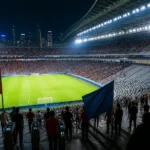





New Jersey is moving early to make FIFA World Cup 2026 more accessible for residents near one of the tournament’s biggest venues. Governor Mikie Sherrill and New York/New Jersey Host Committee CEO Alex Lasry announced that more than 750 free tickets will be distributed to New Jerseyans for World Cup matches at the New York/New Jersey Stadium, according to the state’s official release.
The announcement matters because World Cup tickets are expected to be in high demand once the tournament opens next summer. FIFA says the competition runs from 11 June through 19 July 2026, and the New York/New Jersey Stadium is one of the official venues on the World Cup calendar. For local fans, the giveaway offers a rare chance to attend a global event that will bring the world’s attention to the region.
The state’s plan is also notable for how it divides the tickets. The release says 500 tickets are reserved for New Jersey communities, 200 are set aside for nurses and pediatric patients, and 70 additional opportunities will be offered through the Welcome World Rewards program. That structure points to a broad public-access approach, with community organizations and front-line health workers among the groups being prioritized.
What New Jersey Announced
The official New Jersey governor’s office says the ticket initiative is a joint announcement from Governor Sherrill and Host Committee chief executive Alex Lasry. The release describes the plan as more than 750 free tickets for New Jersey residents tied to FIFA World Cup 2026 matches at the New York/New Jersey Stadium.
One important detail is that the state announcement does not frame the giveaway as a narrow promotion for a single group. Instead, it spreads the tickets across community access, health-care workers and patients, and the Welcome World Rewards program. That makes the initiative more than a one-off giveaway; it is a public-facing distribution effort designed to connect residents with the tournament in several ways.
New Jersey Youth Soccer players from underserved communities are explicitly included among the groups eligible for the 500-ticket community allocation, according to the state release. However, the official material does not break down exactly how many of those 500 tickets will go to any one subgroup, so any more detailed split should be treated as unconfirmed.
Who Can Benefit From the Tickets
The clearest verified breakdown is simple. New Jersey officials say 500 tickets are for community groups, 200 are for nurses and pediatric patients, and 70 are tied to the Welcome World Rewards program. The release also says New Jersey Youth Soccer players from underserved communities are among those eligible for the community-ticket pool.
That mix gives the program a local-service angle as well as a youth-soccer connection. For families, the value is obvious: World Cup tickets are likely to be among the most sought-after seats in North American sports next year, and access to free entry can open the event to people who might not otherwise be able to attend.
For nurses and pediatric patients, the allocation carries a different kind of significance. It recognizes health-care workers and families who are often closest to the day-to-day stresses that large public events can also interrupt. In practical terms, the distribution suggests the state wants the World Cup to feel like a civic celebration, not just a premium sports product.
It is also worth separating verified facts from headline language elsewhere. A secondary headline referenced “250 additional free FIFA World Cup 2026 tickets for NJ youth,” but that exact split is not confirmed in the official release. The state’s announcement instead refers to 500 community tickets total and says youth soccer players from underserved communities are among the eligible groups.
Why This Matters for Fans
The timing of the announcement gives the program added weight. FIFA’s official ticketing page confirms the tournament schedule from 11 June to 19 July 2026, which means there is still time for local organizing and ticket distribution before the first match kicks off. But public interest will almost certainly climb as the opening match approaches.
That matters in a region like New York and New Jersey, where demand for major events is routinely high and travel patterns can be complicated by crowd size, transit schedules and hotel availability. Free tickets create a bridge between the tournament and local communities, especially for people who may live closest to the venue but have the least access to premium sports pricing.
There is also a symbolic piece here. World Cups are often discussed through television ratings, star players and global rivalries, but local access programs are what make the event feel real to residents. A ticket in the hands of a youth player, a nurse, a family or a patient is a reminder that a tournament of this scale can still be rooted in place.
New York/New Jersey Stadium Context
FIFA’s ticketing materials identify the New York/New Jersey Stadium as a World Cup 2026 venue. The official seat-selection page in FIFA’s system also shows a match listing for 13 June 2026 at 18:00, which confirms that the venue will host at least one scheduled game in the tournament. The supplied material does not identify the teams for that fixture, so those details should not be inferred.
For readers outside the region, the venue is part of the broader New York/New Jersey host footprint and is among the most recognizable stadiums in the tournament lineup. Its location gives the state announcement an added local dimension because many residents will be able to travel to the match without crossing a long-distance border or planning an international trip.
That local connection is likely one reason the ticket announcement has drawn attention. A World Cup match in the area is not only a sports event; it is also a public gathering that can influence transit, neighborhood traffic, community celebrations and the broader atmosphere in the months leading into the tournament.
Because the supplied material does not verify specific match assignments beyond the venue and the one listed seat-selection date, fans should expect more fixture-level detail to emerge closer to the tournament. For now, the confirmed point is that New Jersey residents are being given a direct path into one of the World Cup’s key host venues.
What Happens Next
The next step is the actual distribution of the ticket allocations announced by the governor’s office and the host committee. The official release confirms the categories, but it does not provide full public details in the supplied material about how each ticket will be claimed, when selections open, or how the reward-program opportunities will be assigned.
That means the key unresolved issue is practical access: who exactly receives the tickets, through what process, and on what timeline. Those details matter because the demand environment for World Cup tickets is likely to become more competitive as FIFA 2026 moves closer.
For New Jersey residents, the main takeaway is that the state is trying to reserve a meaningful number of seats for local communities before the tournament reaches its first U.S. summer matches. For everyone following the host-city buildout, the announcement is another sign that World Cup 2026 is shifting from planning to public participation.
The important date to keep in mind remains 11 June 2026, when the tournament begins, with matches running through 19 July. Until then, the ticket initiative in New Jersey stands as one of the clearest examples of how host regions are trying to turn a global event into a local opportunity.