





The Knicks return to Madison Square Garden for Game 4 of the NBA Finals on Wednesday, June 10, and fans planning to gather near the arena will still be entering a controlled environment. The NYPD says it will maintain a security perimeter outside MSG and allow a ticketed watch party for roughly 1,000 screened attendees, using measures similar to those in place for Game 3.
That decision has kept the focus on how the city wants to balance celebration with crowd control. Madison Square Garden Sports Corp. has publicly criticized Mayor Zohran Mamdani and Police Commissioner Jessica Tisch over the arrangement, but city officials have maintained that security planning is the guiding factor. The dispute is unfolding against the backdrop of an already tense Finals atmosphere and a week of changing access rules around the arena.
For fans, the practical issue is simple: not everyone will be able to treat the area around MSG like a normal playoff plaza. For nearby businesses, commuters, and anyone moving through Midtown, the perimeter means heavier screening, tighter pedestrian flow, and a more managed game-night footprint than many postseason nights at the Garden.
What the City Is Doing at MSG
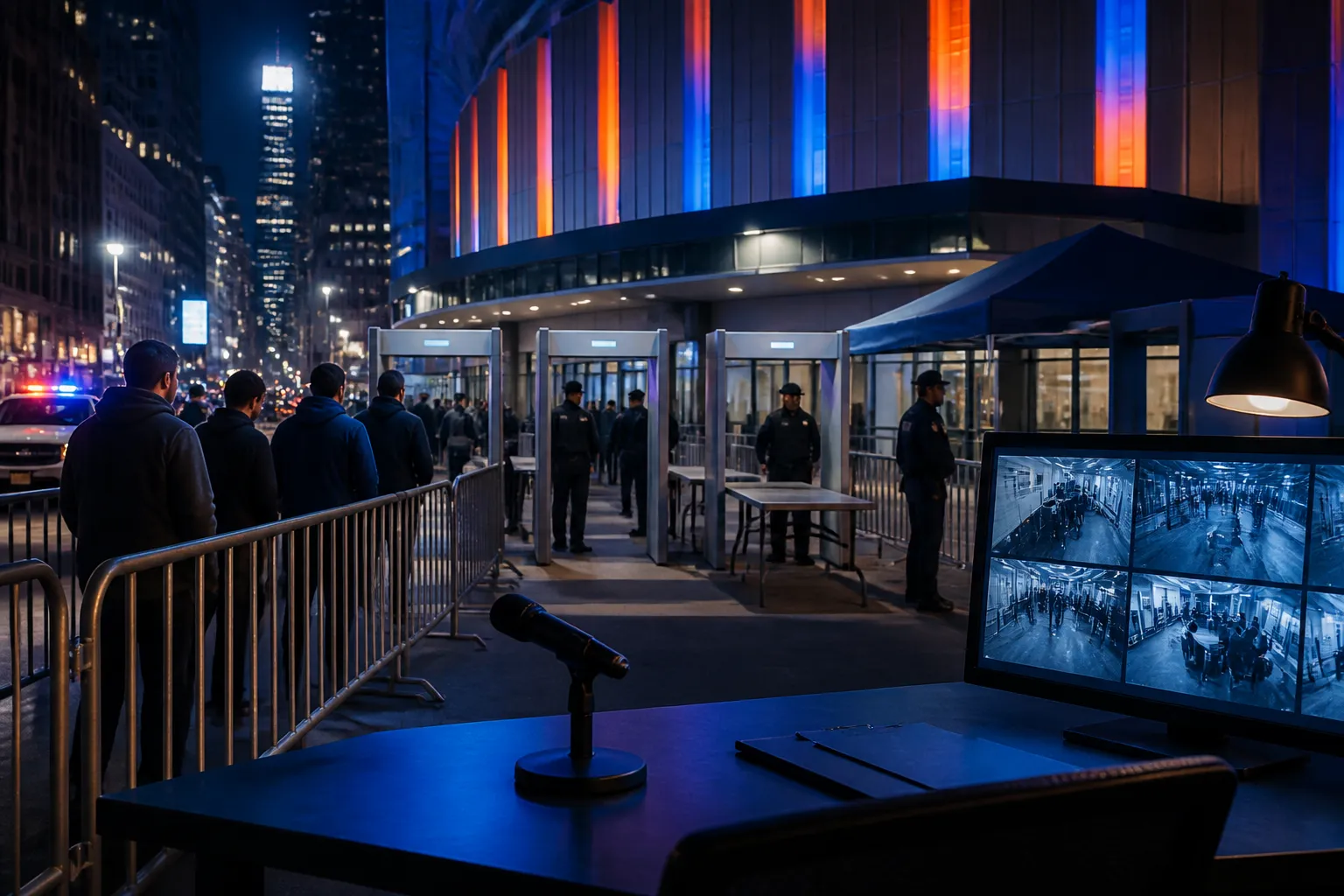
According to the NYPD, the Game 4 watch party outside Madison Square Garden will be ticketed and screened, with about 1,000 people allowed in under security procedures similar to those used for Game 3. The city has not described the setup as a full public plaza gathering, which means access will remain limited and organized rather than open-ended.
That matters because watch parties outside major venues can quickly become crowd-management problems when demand outpaces space. In this case, officials are treating the area around MSG as a controlled event zone, not just an extension of the arena concourse.
The mayor’s office also announced June 10 as “Wear Blue and Orange Day” in honor of the Knicks, adding a civic note to a game already drawing intense attention. The symbolism is lighthearted, but the access rules around the arena are not.
A separate Bryant Park watch party was announced earlier after officials determined a gathering could not be held outside MSG for Game 3 because of heightened security requirements tied to President Donald Trump’s attendance. That created a fallback location for fans who wanted a public viewing option without crowding the Garden perimeter.
How Game 3 Shaped Game 4
The current Game 4 setup did not appear out of nowhere. An earlier AP report said the Game 3 restrictions were tied to Trump’s attendance, and the city later said the Secret Service and NYPD decided a watch party could not safely be held outside MSG under those conditions. In response, the Bryant Park gathering was added as an alternative.
That sequence helps explain why Wednesday’s plans still look cautious even though Trump is not attending Game 4. Once a security posture is built around a major event, officials often keep parts of it in place if they believe crowd conditions still warrant it.
The AP also reported that Game 3 featured security disruptions connected to the presidential visit, and that context appears to have influenced how the city approached the next game. Rather than reset the area to a typical playoff setup, officials opted to keep a perimeter and limited entry model in place.
For regular fans, the key difference is between a spontaneous crowd gathering and an organized ticketed event. The latter can be screened and counted in advance, which gives police and venue staff more control over who is inside the perimeter and how people move around it.
The Dispute Over Security Measures
Madison Square Garden Sports Corp. responded publicly by calling Mayor Mamdani and Commissioner Tisch “New York City’s biggest party poopers.” That criticism suggests the company believes the city is being overly restrictive, but the available reporting does not independently establish that the decision was driven by politics rather than security concerns.
That distinction matters. The city’s explanation centers on safety and crowd management, while MSG’s remarks frame the issue as unnecessary interference with a celebration. Those are competing interpretations of the same event, and readers should separate the allegation from the underlying fact that a security perimeter will remain in place.
From a practical standpoint, the disagreement is not just about rhetoric. It affects how many people can gather near the arena, what kind of lines will form, and whether fans can expect a more open public atmosphere around the building.
The argument also lands in a city that has dealt with high-visibility event security before. Officials are not only reacting to one playoff game; they are applying experience from a week in which access to the arena area became part of the story.
What It Means for Fans and Midtown
For Knicks supporters, the Game 4 watch-party rules mean planning matters more than usual. A ticket does not just buy a view of the game; it also determines whether a fan can get into the controlled area near MSG at all.
That setup will likely shape the atmosphere outside the arena. A screened, ticketed crowd is different from the loose, open gatherings that often build around playoff games, especially when a team is on the edge of a milestone in the postseason.
Midtown businesses and transit riders may feel the effects too. Even without a full closure, a perimeter around Madison Square Garden can slow foot traffic, change pickup and drop-off patterns, and alter the normal flow of customers passing through the area before and after the game.
For nearby merchants, the change cuts both ways. A larger crowd can bring more potential customers, but a more restricted and heavily managed perimeter can also reduce the kind of spontaneous spillover that sometimes helps restaurants, bars, and shops during playoff nights.
The city’s approach also underscores how major sports events in dense neighborhoods rarely remain purely sporting affairs. At MSG, security, transit, venue access, and public celebration are all part of the same equation.
What to Watch Next
The immediate question is whether the Game 4 watch party proceeds without the same kind of disruption that affected Game 3. Officials have already made clear that the area will stay screened and controlled, but the exact experience for attendees will depend on how smoothly entry and crowd movement go on Wednesday.
Another open issue is whether MSG’s criticism will lead to any further public back-and-forth with city officials. So far, the city’s position has been presented through its security planning, while the company’s response has been publicly combative but not independently verified as to motive.
What is already known is that the game is real, the watch party is limited, and the perimeter will stay. What remains unresolved is how the city and the venue will describe the balance between safety and celebration if the crowd around Madison Square Garden behaves differently than officials expect.
For now, the clearest takeaway for fans is straightforward: Game 4 will still be an event night at MSG, but not a free-for-all. The city is keeping the area tight, and anyone planning to be near the Garden should expect a more controlled setup than a typical playoff watch party.